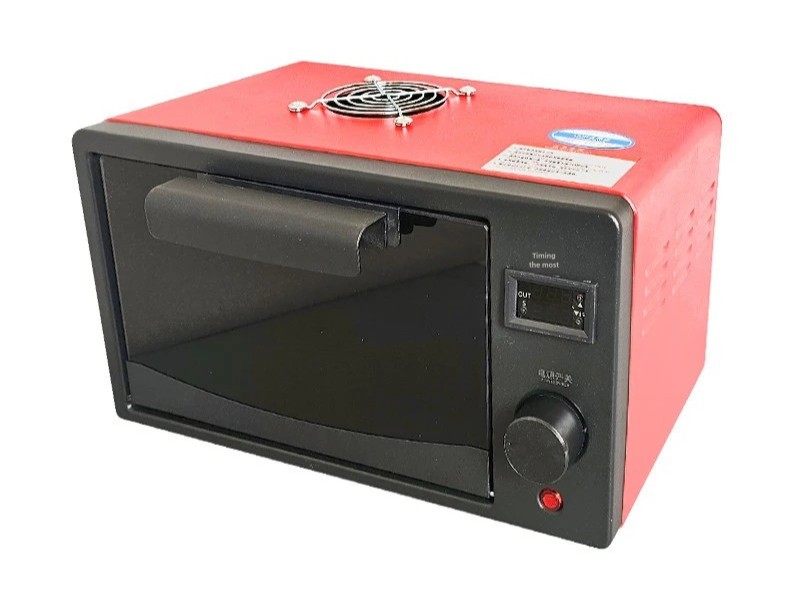
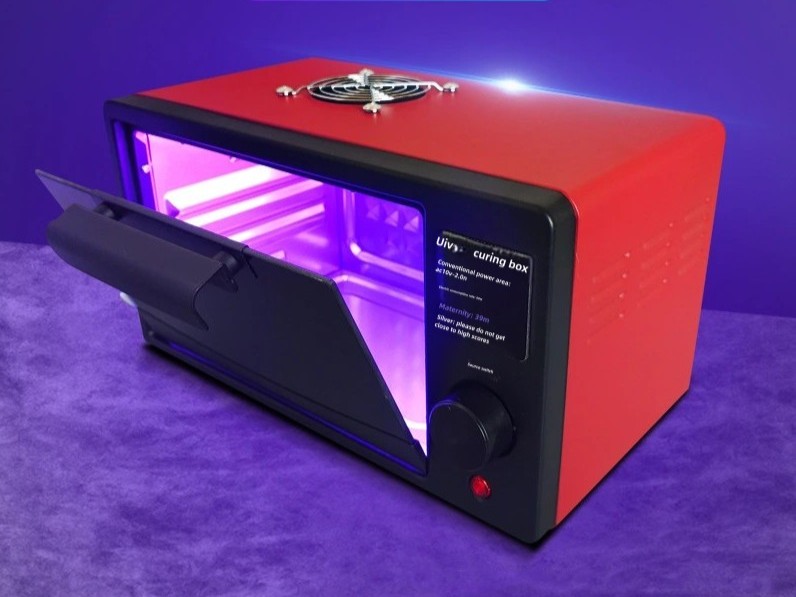
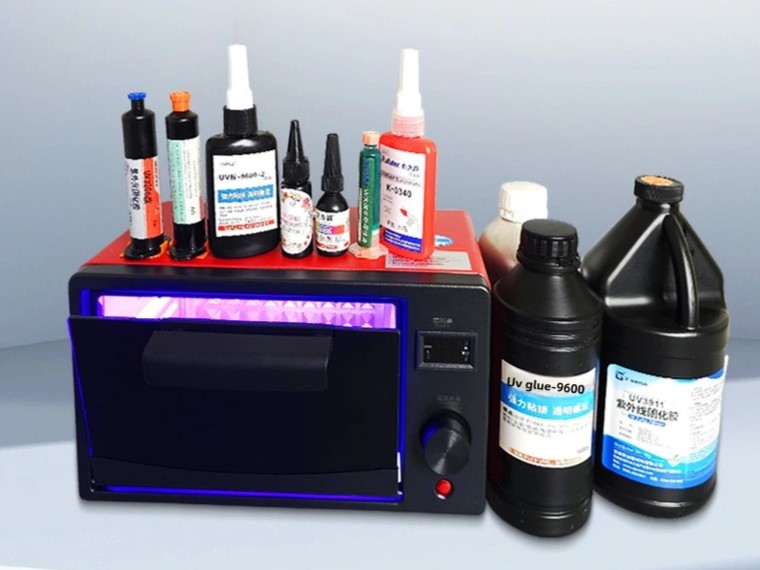
UV Glue Curing Oven details:
(1) Product name:
UV Glue Curing Oven
(2) product power: 18W -500W
(3) input voltage: AC90-260V 50Hz.
(4) Color: 365nm/395nm/405nm ultraviolet light (ultraviolet light is invisible light).
(5) Lamp socket model: Portable
(6) Lamp holder material: aluminum.
(7)Emitting distance: Recommended 3-5 cm. The closer the distance, the faster the curing speed.
(8)Ambient temperature: 5°C - 42°C (operating environment)
(9)Relative humidity: ≤ 85%
(10) Warranty of UV Glue Curing Oven: 2 years.
UV Glue Curing Oven Description
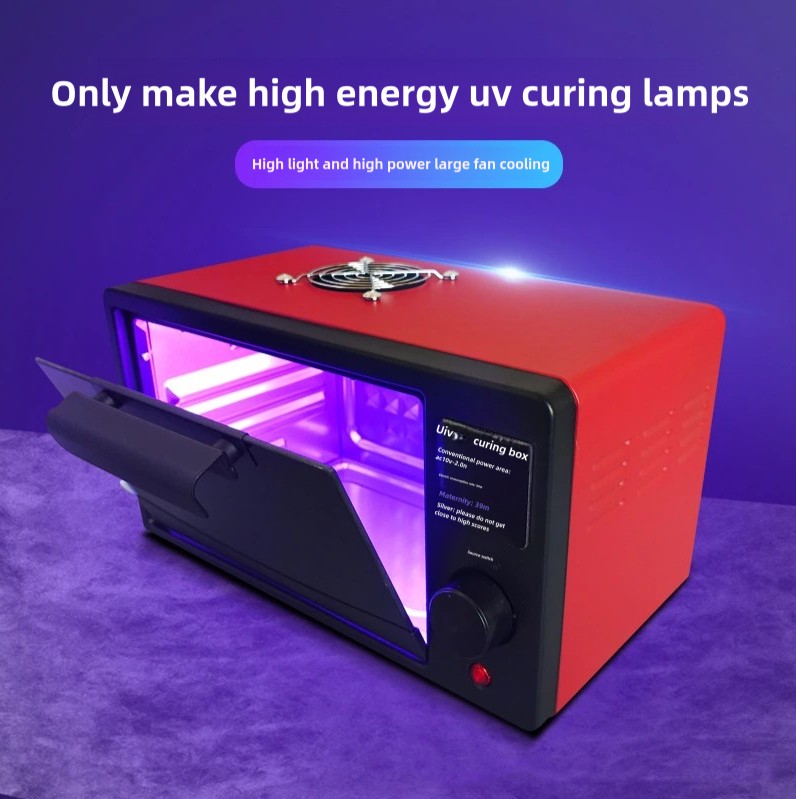
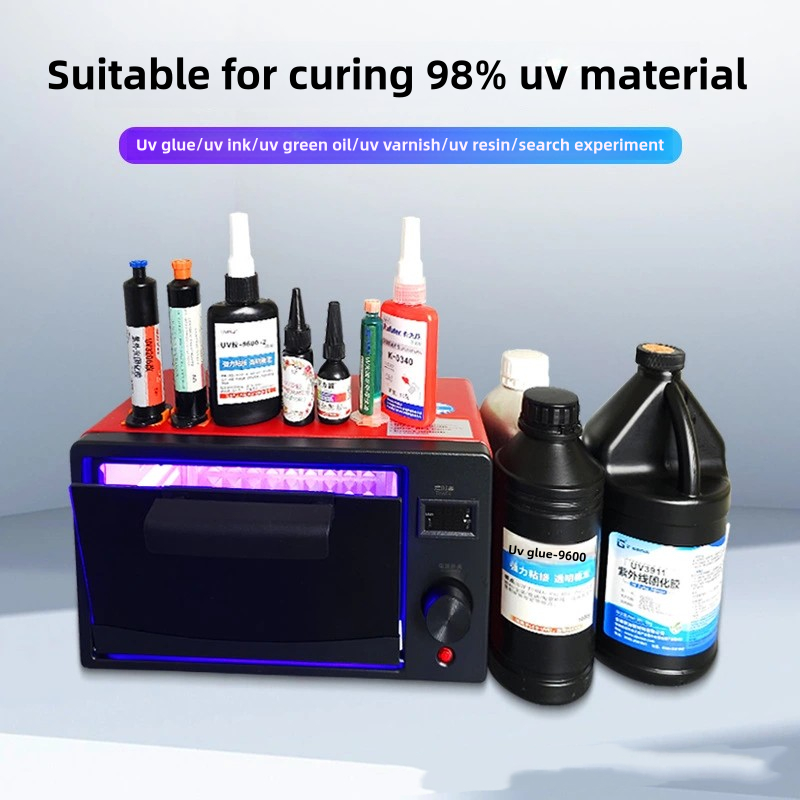
The UV curing oven is a professional equipment used for curing UV photosensitive materials. It usually features high efficiency and energy conservation. The power setting can be adjusted within the range of 0% - 100%, and it is suitable for various wavelength ranges such as 365.385.395.405nm. The ultraviolet light source has strong penetration and can dry the paint in a few seconds. It dries the paint quickly, is energy-efficient, and has a beautiful paint surface gloss. It has a function of adjustable wavelength from 365 to 405nm. It is easy to use and comes with built-in fans and cooling functions. It is safe and reliable, with forced air cooling and high energy output. It has a long service life of approximately 10,000 hours. This product is widely used in electronic manufacturing and medical device fields, for rapid glue bonding. It is made of copper or aluminum alloy materials, and the specifications are divided into two sizes: UV335MM*185MM*180MM and 520mm*320mm*340MM. The recommended curing distance is 10mm - 100mm, which can meet the curing requirements of different materials.
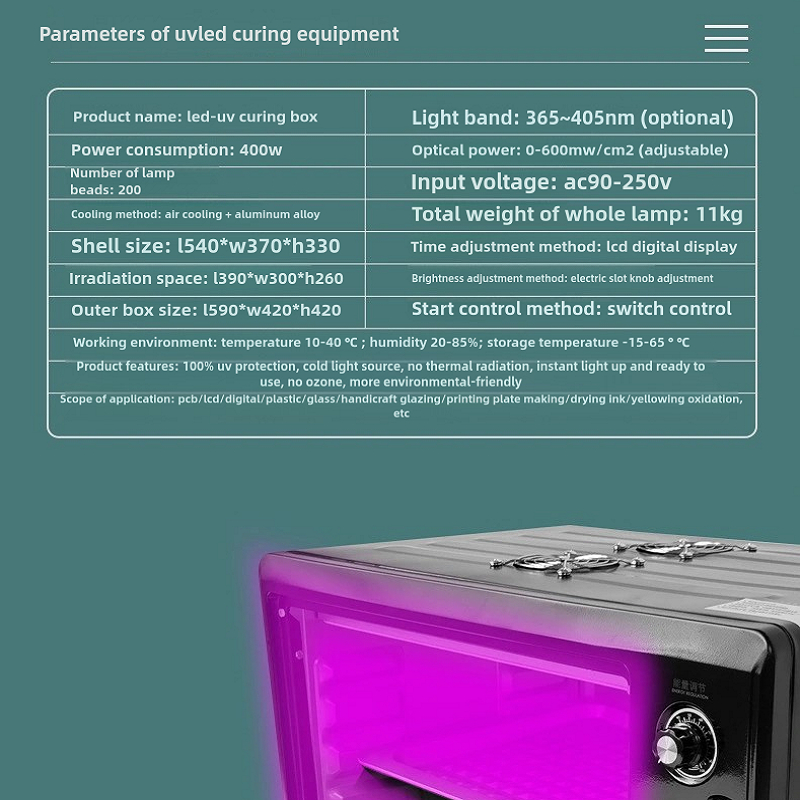
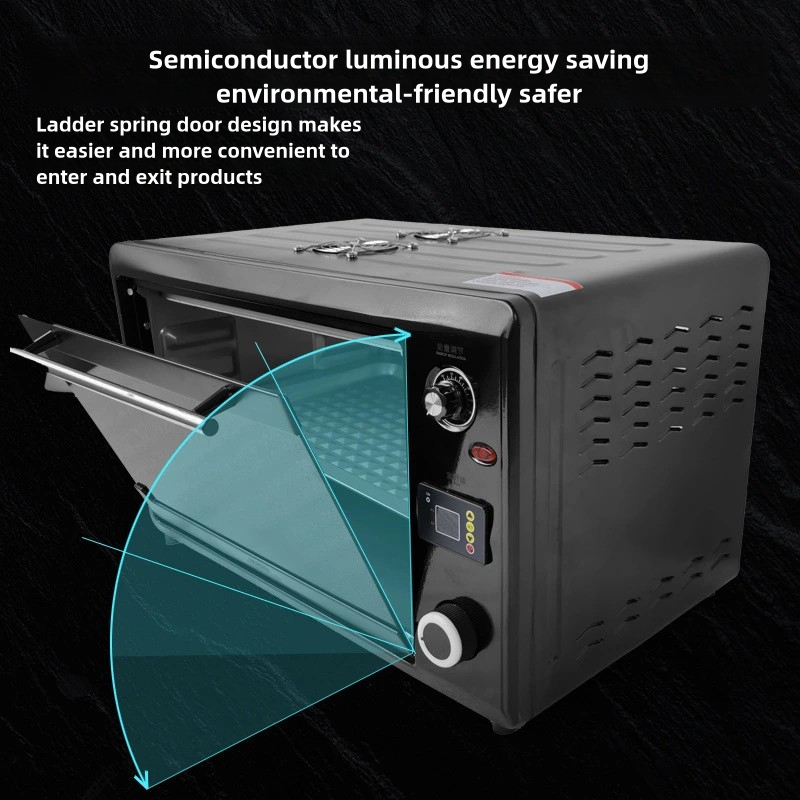
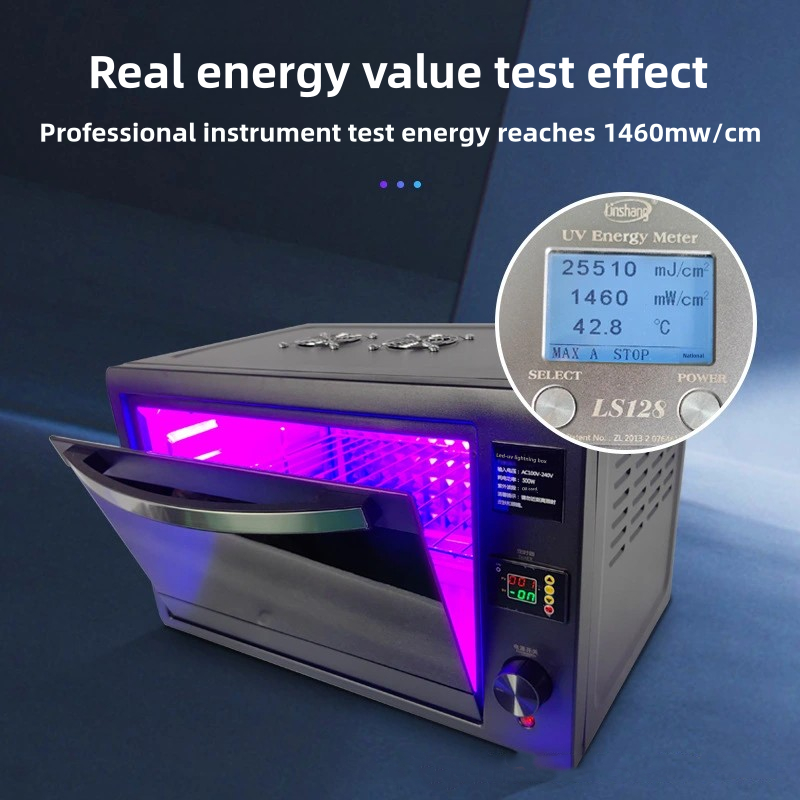
What is a light curing Oven used for?
This Glue Curing Oven relies on the reflected effect of specific wavelength visible light to quickly solidify and fix raw materials such as glue and printing ink. It is not of the same type of equipment as the household oven used for baking food. The device triggers the internal physical and chemical changes of the raw materials through the light source, and its shaping speed is fast with a relatively low operating temperature. It is commonly used in industrial processing, electronic product processing, and manual creation fields.
The main function of the equipment is to shape the light source. It exposes the liquid photosensitive material to light, converting it into a solid product. The different application scenarios have distinct purposes:
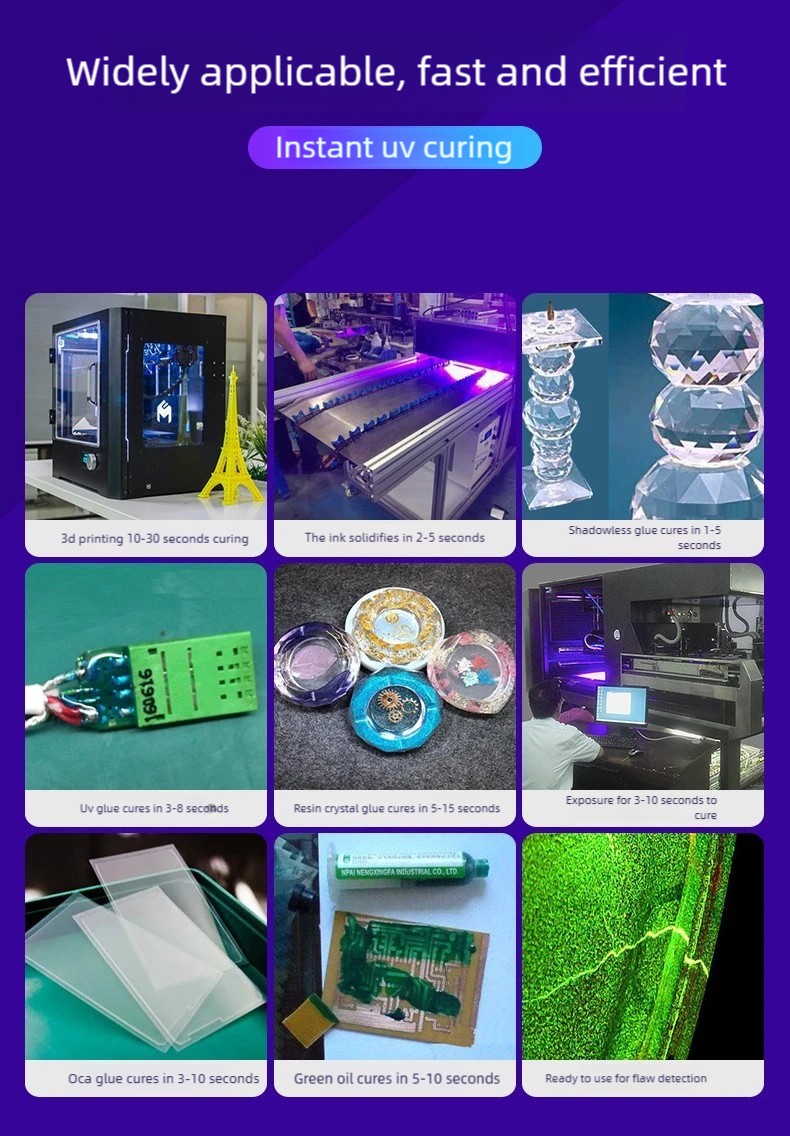
Industrial and electronic product processing: Primarily used for the production of digital casings, circuit boards, and the bonding and sealing of small components. It enables the rapid setting of special adhesives and printing coatings, thereby enhancing the efficiency of the assembly line.
2. Handcrafted creations and beauty services: suitable for resin ornaments, post-processing of 3D printed products, nail polish application for shaping, pull-out cavities facilitate the placement of small raw materials. The gel becomes firm and transparent within just a few seconds.
3. Printing and surface spraying processing: Used for special ink printing, leather goods, wood, and metal surface protection coatings to achieve a firm and durable finish. The final surface is highly wear-resistant and has a bright and rich luster.
The differences from a conventional heating oven
Many users tend to confuse these two types of cabinet equipment. Their operation principles are quite different. Before making a purchase, be sure to distinguish between them.
The principles of operation are different: Ordinary ovens heat the materials by relying on electric heating elements; while the light-forming box activates the photosensitive ingredients in the raw materials through specially designed light sources, and the shaping can be completed under a low-temperature environment.
2. Working temperature and forming time: The box is in a cold light source operation mode, with a small temperature rise during operation and less likely to damage workpieces that are not resistant to high temperatures. The raw material forming process usually only takes a few seconds. Traditional ovens take a long time to heat up and consume a lot of electricity, and are only suitable for high-temperature drying of raw materials.
3. Energy-saving and Environmental Protection Comparison: During the shaping process of the light source, no unnecessary organic solvents are emitted, and the energy consumption is only one-third of that of traditional drying equipment, making it even more energy-efficient and environmentally friendly.
If you prefer a shorter version or a segmented release format, I can make adjustments accordingly.
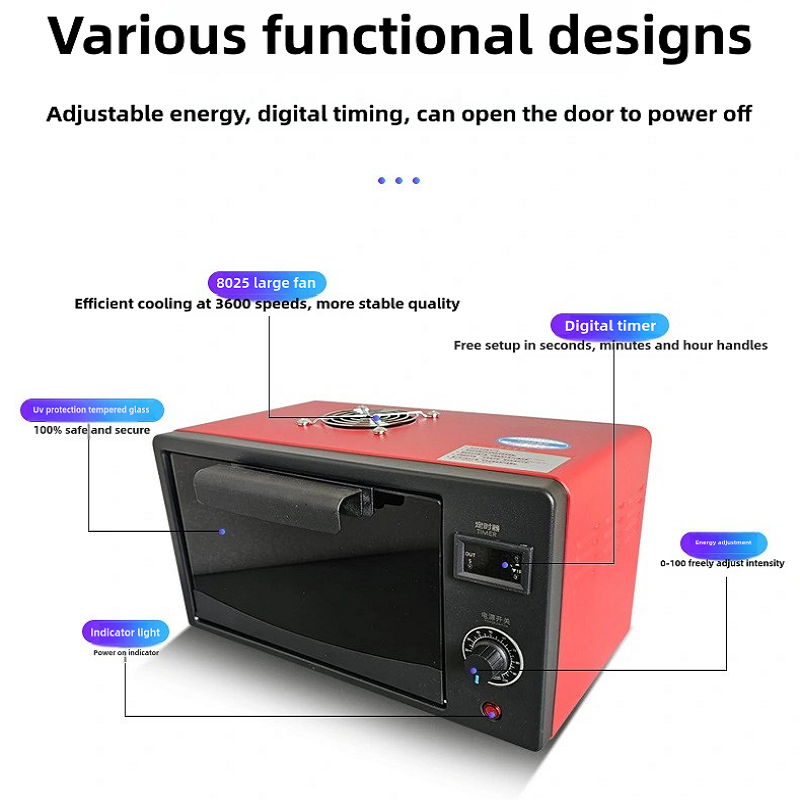
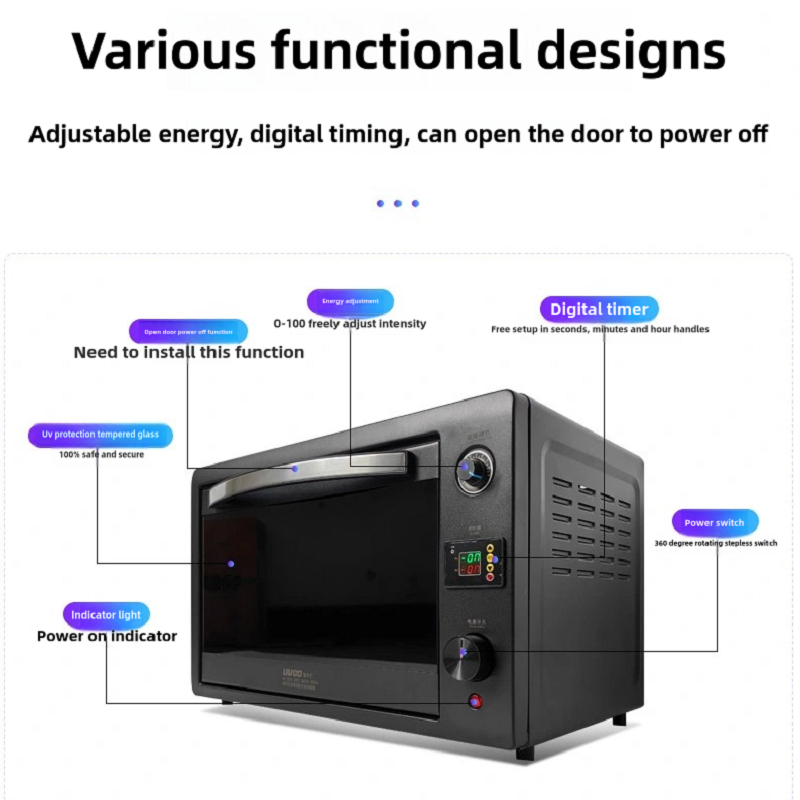
How to Choose an UV Curing Oven
The specifications and precautions of UV Curing Oven vary depending on the usage scenario. When choosing one, focus on the following points:
1. Look at the type and size:
Desktop drawer type: Suitable for home DIY, manicures, and small-scale handcrafts. It is small in size, and the operation is as simple as using a microwave oven. It automatically counts time when pushed into the drawer.
Industrial vertical/line type: Suitable for large-scale production in factories. It has a high power and often comes with a conveyor belt. Consider the cooling system (air cooling or water cooling).
2. Look at the light source and cooling:
Prioritize UV LED light sources, which have a long lifespan (up to tens of thousands of hours), are ready to use immediately, and do not require preheating.
For high-power equipment, pay attention to cooling. Water cooling has a good effect but is costly. The air cooling structure is simple but has slightly louder noise. Choose based on power requirements.
3. Pay attention to safety protection:
UV rays can be harmful to the skin and eyes. When operating, avoid looking directly at the light source. Ensure the device has good shading properties and keep irrelevant personnel away from the work area.
Regularly check the safety of the wiring. Handle with care when moving to prevent lamp tubes from cracking or parts from loosening.
Precautions
1. Portable UV Curing Oven has strong radiation energy. try not to irradiate the skin andeyes within 30cm cm.
2. when operating UV Curing Oven, it is best to control the irradiation distance toaround 3- 5cm so that the energy will be maximized.
3. please do not modify UV Curing Oven without authorization, otherwise thewarranty will be void.4. do not squeeze the lamp beads with force, otherwise the lamp will notlight up.
5. UV Curing Oven supports seven-day no-reason returns. within 7 days ofreceipt, please do not scratch or bump the product, and do not throw awaythe original packaging. returns and exchanges can be made without
affecting secondary sales.