

2835 SMD LED Colors and Wavelengths: UV, IR, 660nm, Full Spectrum and More
When most people think of 2835 SMD LEDs, they usually think of white lighting in common color temperatures such as 3000K, 4000K, or 6500K. However, the 2835 package is not limited to standard white LEDs.
2835 SMD LEDs can be manufactured in a wide range of colors and specific wavelengths, from violet and blue to green, amber, red, deep red, ultraviolet (UV), and infrared (IR). They can also be designed for applications requiring full-spectrum light or specific spectral combinations.
This makes the 2835 SMD LED package suitable for much more than general illumination.
What Colors and Wavelengths Are Available in 2835 SMD LEDs?
LED color is closely related to wavelength. Different semiconductor materials and LED chip technologies produce different dominant wavelengths, resulting in different visible colors or invisible radiation such as UV and IR.
The following table provides a practical overview of common colors and wavelength options available for 2835 SMD LEDs.
| Color | Typical Wavelength | Main Function | Common Applications |
|---|---|---|---|
| Deep Red | 650–660 nm, especially 660 nm | Photosynthesis and photomorphogenesis | Horticulture lighting, plant growth |
| Red | 620–630 nm, 625–630 nm | Signaling, display and decoration | Indicators, displays, decorative lighting |
| Pink | Around 620–630 nm, peak around 625 nm | Decorative and ambient lighting | Decorative lighting, specialty lighting |
| Orange | 600–610 nm | Signaling and decoration | Decorative lighting, signal lamps |
| Amber | 590–595 nm, 584–596 nm | High visibility and signaling | Automotive lighting, signal lamps |
| Yellow | 568–575 nm, 588–595 nm | Warning and indication | Indicators, signal lamps |
| Yellow-Green | 560–575 nm | High-visibility signaling | Signal lights |
| Emerald Green | 515–525 nm | Indication and backlighting | Indicators, backlights |
| Green | 520–535 nm, 505–530 nm | Display and indication | Indicators, displays |
| Cyan | 490–500 nm | Decorative and ambient lighting | Decorative lighting |
| Ice Blue | 460–465 nm, around 480 nm | Decorative and ambient lighting | Decorative lighting, specialty lighting |
| Blue | 450–470 nm, 460–476 nm | Display, excitation and decorative lighting | Displays, white LED excitation, decorative lighting |
| Violet | 410–430 nm | Specialty lighting and excitation | Specialty lighting, fluorescence-related applications |
| UV | Approximately 365–405 nm | Curing, fluorescence and specialty applications | UV curing, inspection, sterilization-related systems |
| Infrared (IR) | Typically 730–940 nm and beyond | Sensing, illumination and detection | Sensors, IR illumination, machine vision |
Wavelength ranges are indicative. Actual peak wavelength, dominant wavelength, spectral bandwidth, and optical performance depend on the LED chip and product specification.
1. Red and Deep Red 2835 SMD LEDs
Red is one of the most widely used monochromatic LED colors.
Typical red 2835 SMD LEDs are available around 620–630 nm, making them suitable for indicators, displays, decorative lighting, and other applications where a strong red signal is required.
A particularly important wavelength is 660 nm, commonly known as deep red.
660 nm LEDs are widely used in horticulture and plant lighting because this part of the red spectrum is highly relevant to photosynthesis and plant photomorphogenesis.
For this reason, 660 nm 2835 SMD LEDs are increasingly used in specialized lighting systems rather than conventional illumination.
2. Pink 2835 SMD LEDs
Pink LEDs can be produced using specific red-spectrum characteristics or combinations of LED emission technologies.
They are primarily used where the visual appearance of the light is more important than conventional illumination performance.
Typical applications include:
- Decorative lighting
- Ambient lighting
- Retail displays
- Specialty lighting
- Architectural and entertainment lighting
For manufacturers requiring a specific visual appearance, the exact wavelength and spectral characteristics should be specified rather than relying only on the color name "Pink."
3. Amber and Orange 2835 SMD LEDs
Amber and orange LEDs occupy an important position between yellow and red in the visible spectrum.
Amber LEDs are commonly found around 590 nm, while orange LEDs are typically around 600–610 nm.
These colors are particularly useful for:
- Automotive lighting
- Warning indicators
- Signal lamps
- Traffic-related applications
- Decorative lighting
Amber light can also provide strong visual visibility under certain environmental conditions, making it useful for signaling applications.
4. Yellow and Yellow-Green 2835 SMD LEDs
Yellow and yellow-green LEDs are commonly used where visibility and signaling are important.
Yellow-green wavelengths around 560–575 nm can appear particularly bright to the human eye under photopic vision conditions.
Typical applications include:
- Indicator lights
- Signal systems
- Control panels
- Displays
- Warning lights
The appropriate wavelength depends on whether the priority is visual brightness, color appearance, or application-specific optical performance.
5. Green and Emerald Green 2835 SMD LEDs
Green LEDs cover a relatively broad wavelength range.
Standard green LEDs can be found around 520–535 nm, while emerald green products are often specified around 515–525 nm.
They are commonly used for:
- Indicators
- Displays
- Backlighting
- Decorative lighting
- Electronic equipment
For display and signaling applications, wavelength consistency is important because even a relatively small shift in peak wavelength can affect the perceived color.
6. Cyan, Ice Blue and Blue 2835 SMD LEDs
Blue wavelengths are particularly important in modern LED technology because blue LED chips are also widely used to excite phosphors in white LEDs.
Typical blue 2835 SMD LEDs are available around 450–470 nm, with specific products available around 460 nm or other target wavelengths.
In addition to standard blue, specialty colors such as cyan and ice blue can be produced for applications where a specific visual effect is required.
Typical applications include:
- Displays
- Backlighting
- Decorative lighting
- Ambient lighting
- Specialty illumination
The exact color appearance depends not only on peak wavelength but also on spectral bandwidth and optical design.
7. Violet and UV 2835 SMD LEDs
Violet and ultraviolet LEDs extend beyond the conventional visible-light range.
Violet LEDs are generally associated with wavelengths around 410–430 nm, while UV products can extend from approximately 365 nm to 405 nm, depending on the application.
UV 2835 SMD LEDs can be used in specialized systems such as:
- UV curing
- Fluorescence excitation
- Inspection
- Detection
- Specialty illumination
UV should not simply be treated as another visible LED color. Different UV wavelengths have significantly different optical and application characteristics, so the target wavelength should be clearly specified when selecting a UV LED.
8. Infrared 2835 SMD LEDs
Infrared light is outside the visible range, but infrared LEDs are important components in sensing and detection systems.
2835 IR SMD LEDs can be designed for wavelengths such as 730 nm, 850 nm, 940 nm, and other application-specific wavelengths.
Common applications include:
- Infrared sensing
- Machine vision
- Security systems
- Optical detection
- Remote sensing
- Near-infrared illumination
The correct wavelength depends heavily on the sensitivity of the receiving sensor or detector. Therefore, IR LED selection should be based on the complete optical system rather than wavelength alone.
9. Full Spectrum 2835 SMD LEDs
Full spectrum LEDs are different from a single-color LED.
Instead of producing light at one narrow wavelength, a full-spectrum LED is designed to provide a broader spectral distribution that more closely resembles a desired reference spectrum.
Full-spectrum 2835 SMD LEDs can be used in applications such as:
- Horticulture lighting
- Plant growth lighting
- Indoor lighting
- Specialty illumination
- Human-centric lighting
- Spectrum-sensitive applications
However, "full spectrum" does not represent one fixed wavelength or one universal spectral curve.
When evaluating a full-spectrum 2835 SMD LED, buyers should look beyond the product name and examine the actual spectral power distribution (SPD), color rendering characteristics, correlated color temperature (CCT), and other relevant specifications.
10. Why Wavelength Matters When Choosing a 2835 SMD LED
For standard white lighting, buyers often focus on parameters such as CCT, CRI, luminous flux, and efficacy.
For monochromatic and specialty LEDs, wavelength becomes one of the most important specifications.
For example:
- A 660 nm LED is very different from a conventional 630 nm red LED.
- A 395 nm UV LED is different from a 365 nm UV LED.
- An 850 nm IR LED has a different application profile from a 940 nm IR LED.
- A blue LED around 450 nm is different from a cyan LED around 495 nm.
Therefore, simply specifying "red," "blue," "UV," or "IR" may not be sufficient for professional LED procurement.
For customized or high-performance applications, buyers should normally specify the target wavelength, tolerance, optical output, forward voltage, operating current, and other relevant parameters.
11. 2835 SMD LED: One Package, Many Spectral Possibilities
The compact 2835 package can support a surprisingly broad range of LED applications.
From visible colors such as red, pink, orange, amber, yellow, green, cyan, ice blue, blue, and violet, to invisible wavelengths such as UV and IR, 2835 SMD LEDs can be developed for applications far beyond conventional white lighting.
Special wavelengths such as 660 nm deep red and broader full-spectrum solutions further expand the application range into horticulture and other specialized lighting fields.
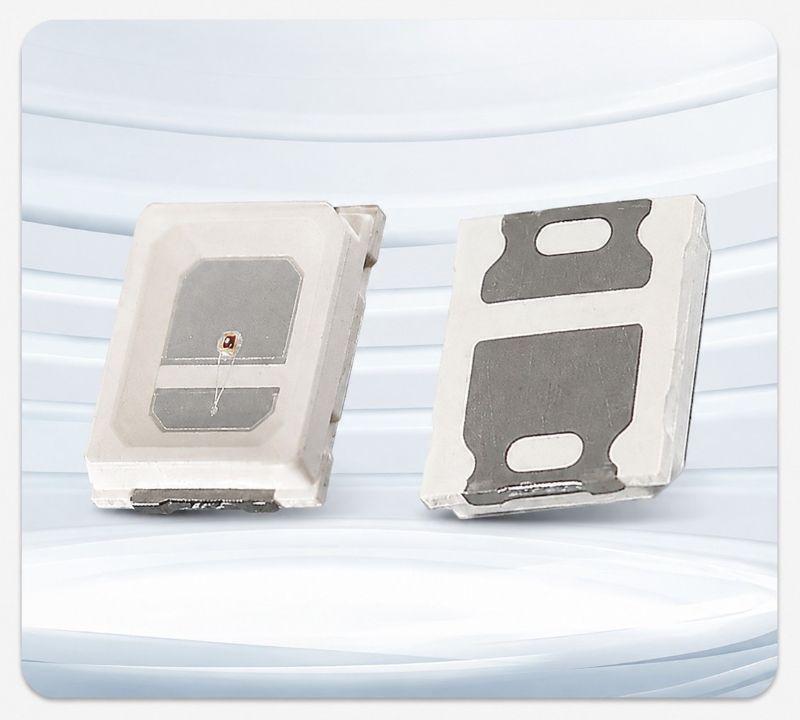
The key point is that the 2835 package defines the physical form factor, not the application or spectral range.
What matters is the LED chip, wavelength, optical design, electrical characteristics, phosphor technology where applicable, and quality control behind the package.
Conclusion
2835 SMD LEDs are not limited to standard white illumination. They can cover a broad spectrum of colors and wavelengths, including red, deep red 660 nm, pink, orange, amber, yellow, yellow-green, green, emerald green, cyan, ice blue, blue, violet, UV, IR, and full-spectrum solutions.
For professional lighting manufacturers, selecting the right 2835 SMD LED should therefore begin with the required wavelength and application, rather than simply choosing a color name.
Whether the requirement is a specific 660 nm deep-red LED for horticulture, a UV wavelength for curing, an IR LED for sensing, an amber LED for signaling, or a full-spectrum solution, the right wavelength and stable optical performance are critical to the final application.
TTLED focuses on 2835, 3030, and 5050 SMD LED solutions and can provide different color, wavelength, and performance options for professional lighting applications.