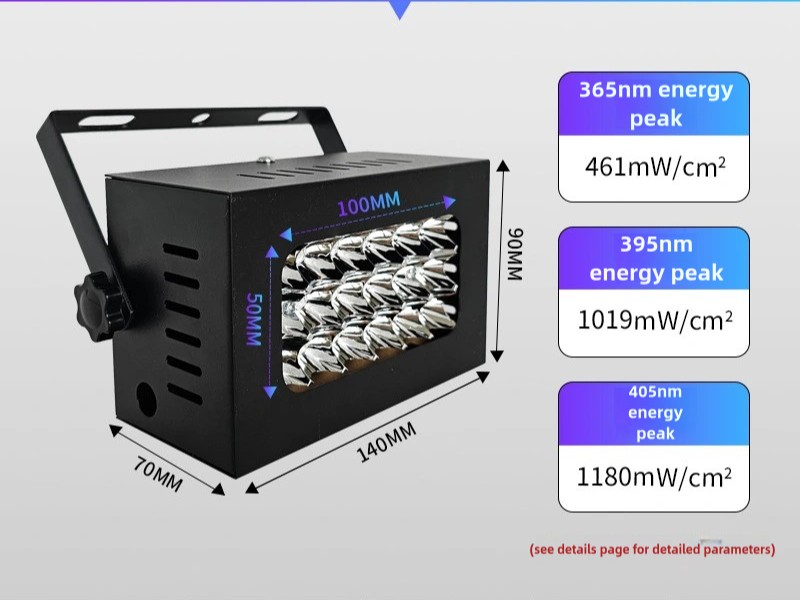
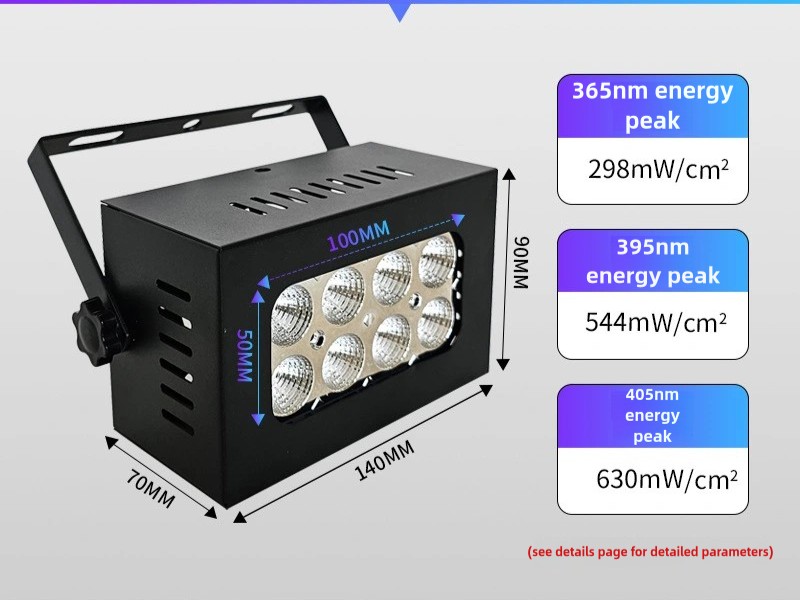
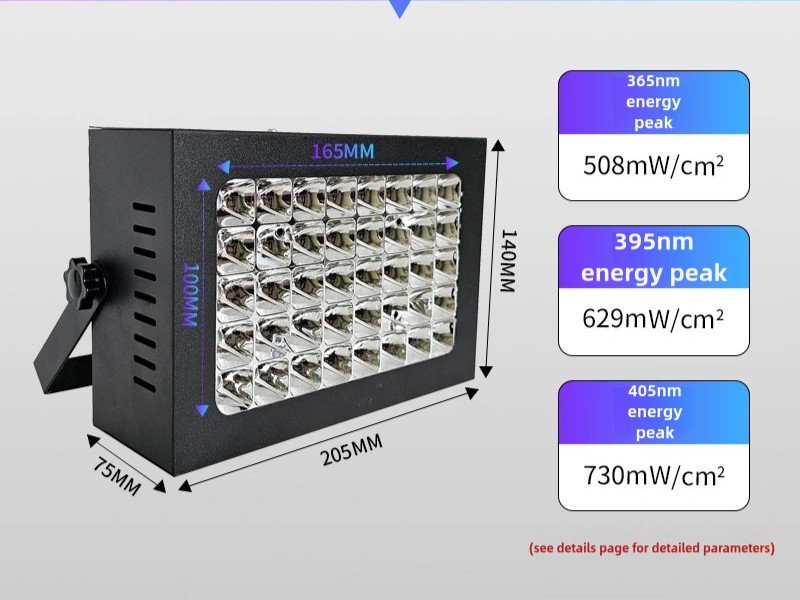
UV curing light for resin details:
(1) Product name: UV curing light for resin
(2) product power: 20W -160W
(3) input voltage: AC90-260V 50Hz.
(4) Color: 365nm/395nm/405nm ultraviolet light (ultraviolet light is invisible light).
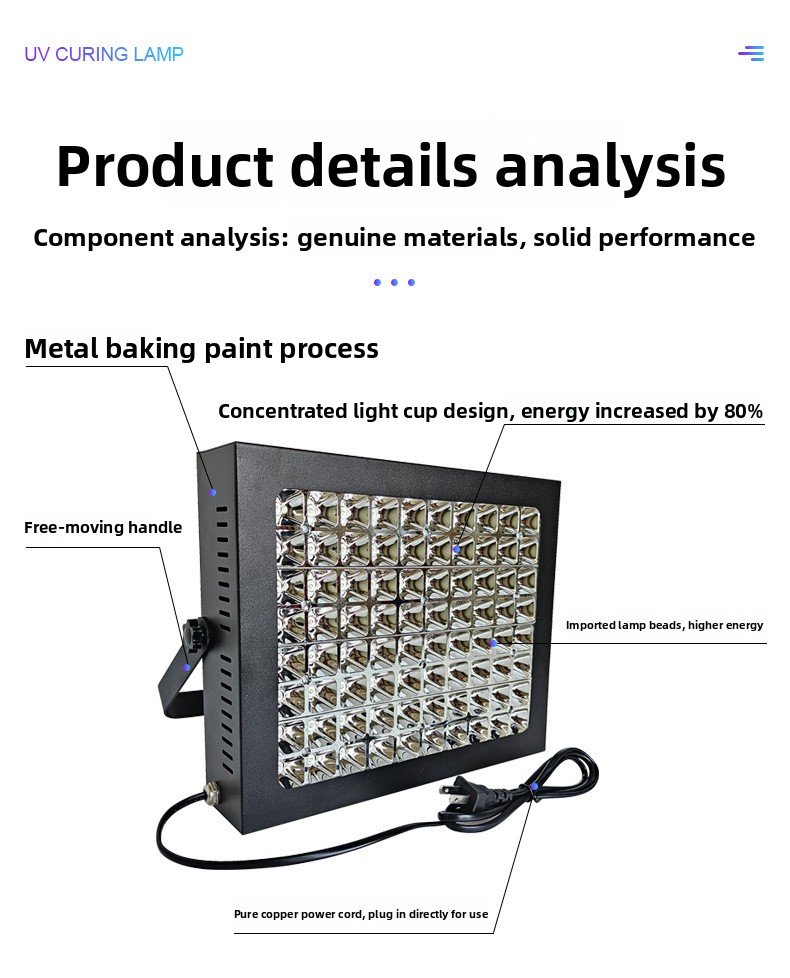
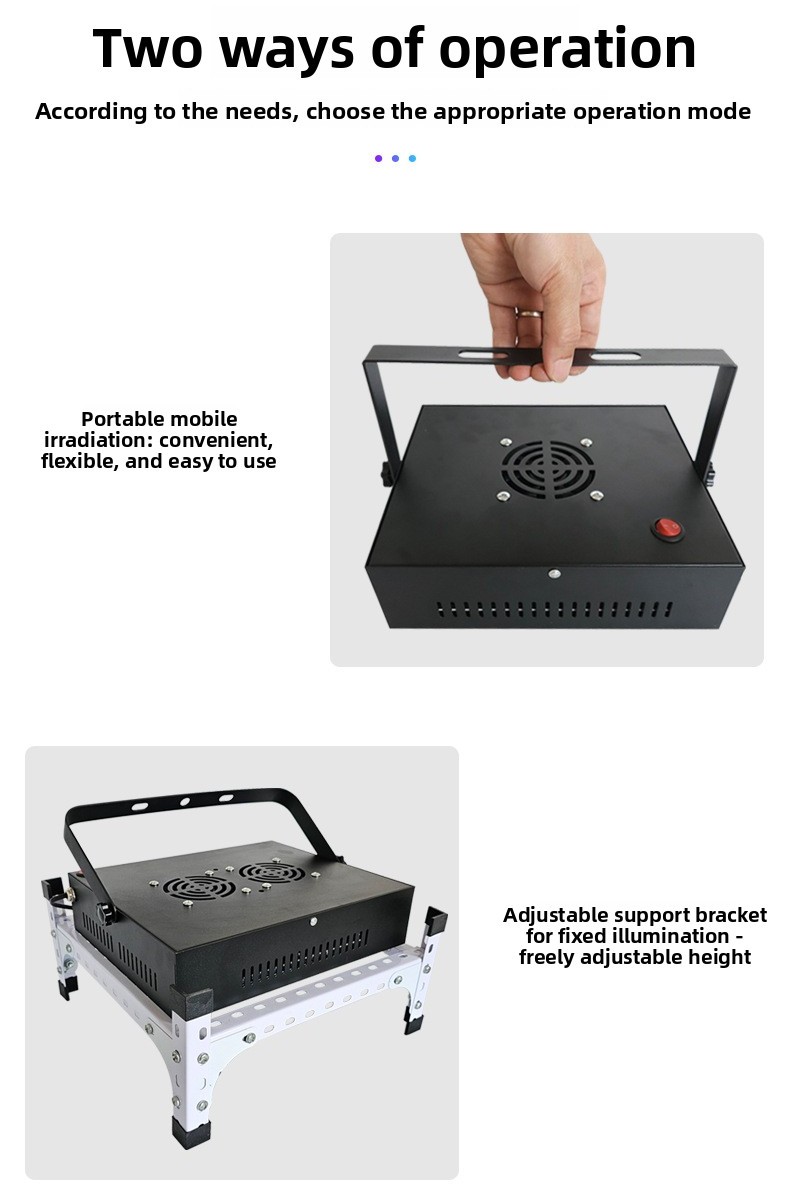
(5) Lamp socket model: Portable
(6) Lamp holder material: aluminum.
(7)Emitting distance: Recommended 3-5 cm. The closer the distance, the faster the curing speed.
(8)Ambient temperature: 5°C - 42°C (operating environment)
(9)Relative humidity: ≤ 85%
(10) Warranty of UV curing light for resin: 2 years.
What factors determine the power level?
1. Material thickness and type: The thicker the adhesive layer or the higher the viscosity, the greater the power required to ensure that the light can penetrate to the bottom; otherwise, the surface may dry while the inside remains soft.
2. Curing area size: The larger the area, the higher the total power required to ensure uniform illumination and avoid dead zones where some areas are dry while others are not.
3. Production line speed: The faster the production line, the higher the energy required per unit time, and a higher-power lamp needs to be matched; otherwise, the product may flow away before curing.
4. Difference in light source type: LED lamps have higher efficiency, and under the same effect, the power value is lower than that of traditional mercury lamps. For example, an 800W LED lamp may have the same effect as a 5.5kW traditional mercury lamp.
Power recommendations for different scenarios:
1. DIY or small-scale precision work: Such as phone screen coating or small jewelry glue application, 10W-50W LED point light sources or small area light sources are sufficient. Too bright may easily damage delicate components.
2. Regular industrial production or medium-sized area: Such as PCB coating or ordinary glue bonding, 100W-200W LED area light sources are more suitable, balancing speed and cost.
3. Large area or thick coating curing: Such as large glass bonding or thick ink layer, 200W-600W or higher power is required, or choose lamp tubes with a power density of 80-120W/cm to ensure curing in the deep layer.
What to pay attention to when choosing power:
1. Focus on power density: Not only the total wattage, but also the power per unit length (W/cm) should be considered. The common range for lamp tubes is 80-200W/cm. This indicator reflects penetration better than the total power.
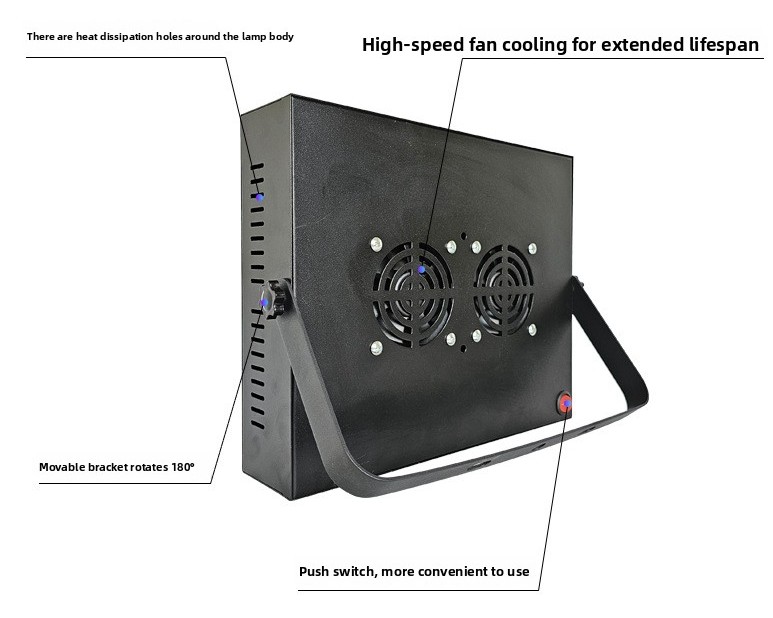
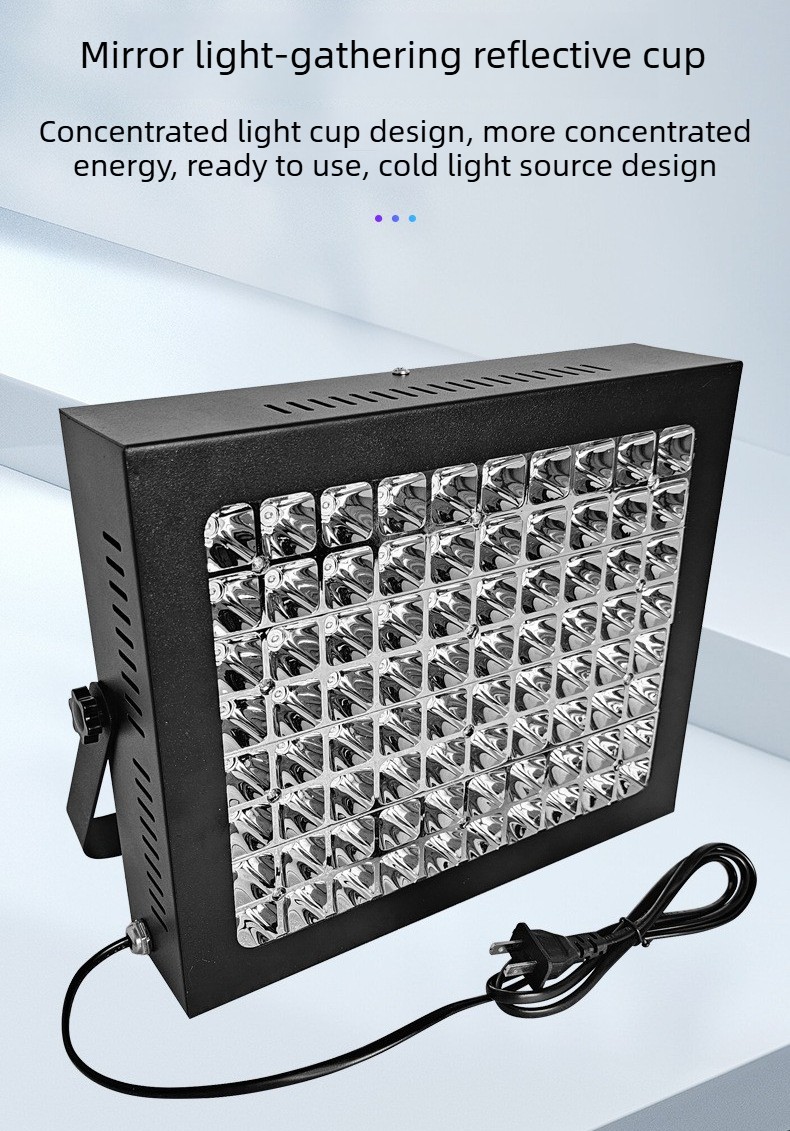
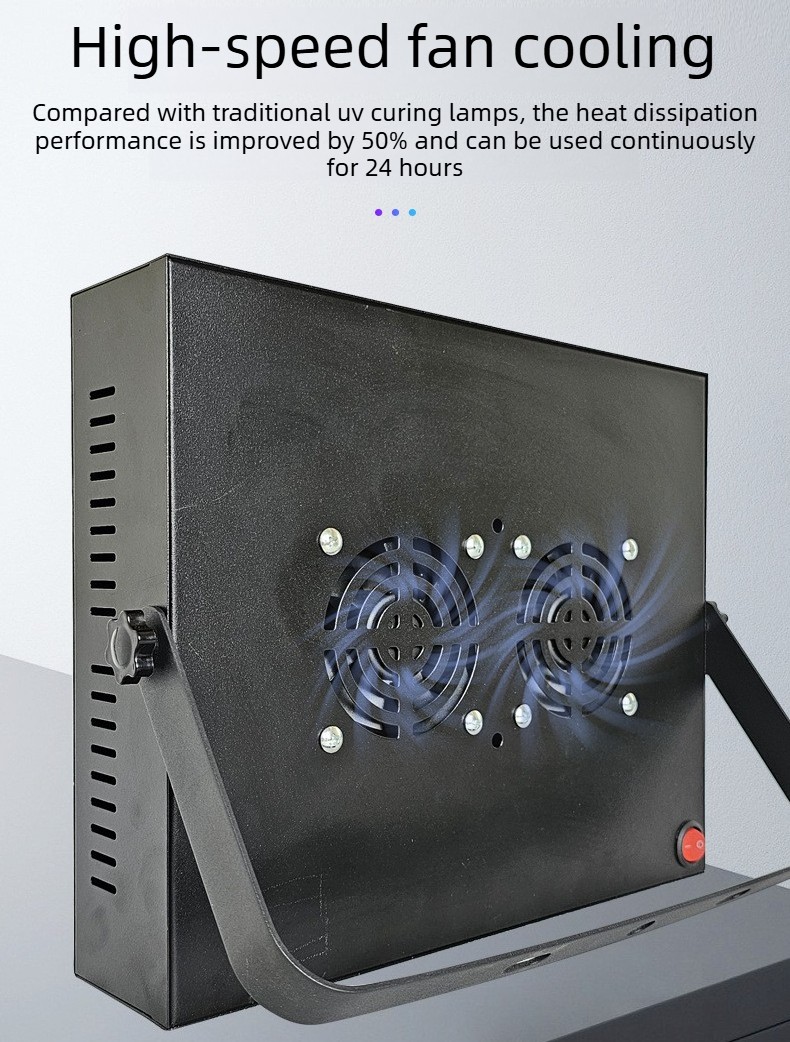
2. Heat dissipation design: High-power lamps generate a lot of heat, and poor heat dissipation will affect lifespan and curing effect. Choose lamps with fans or water cooling design; otherwise, the lamp is prone to burning out.
3. Wavelength matching: Even with high power, if the wavelength is not correct, it is useless. Common wavelengths are 365nm and 395nm. They need to be consistent with the requirements of the glue. Before purchasing, ask the glue manufacturer first.
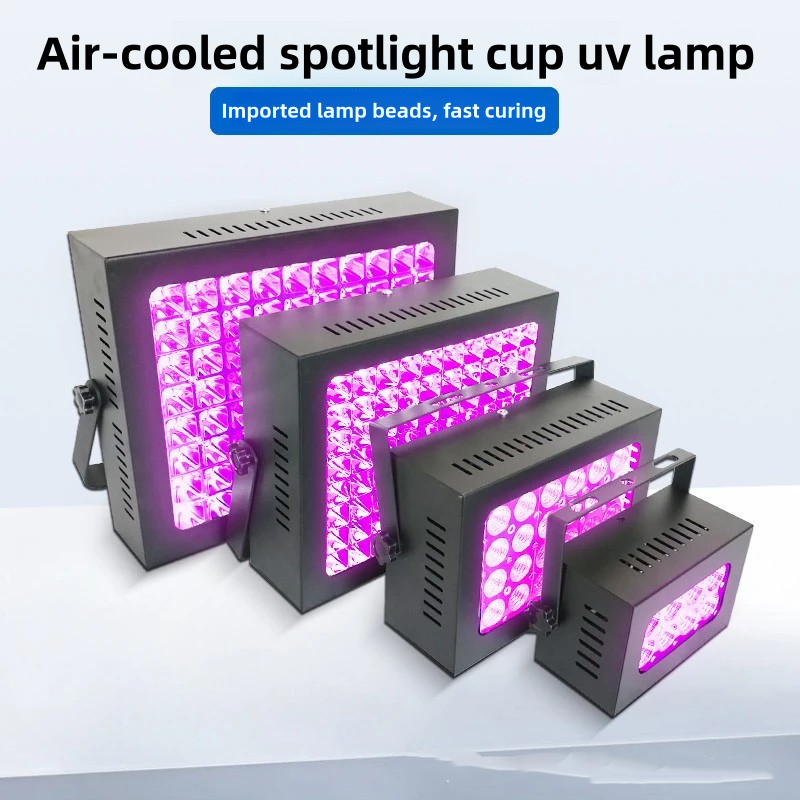
Difference between UV curing light for resin and Ultraviolet light
UV curing light for resin is actually a type of ultraviolet lamp. The main difference lies in their usage and wavelength. The commonly referred to ultraviolet lamps usually refer to disinfection lamps, while curing lamps are specifically used to dry adhesives and inks.
The essence and purpose are different.
• Main purpose: UV curing light for resin are used in industry or by hand to quickly harden paints and adhesives; ordinary ultraviolet lamps are mainly used in hospitals and households for sterilization and disinfection.
What are the differences in wavelength and power?
• UV curing light for resin wavelength: It mainly emits long-wave ultraviolet (UVA), with the peak usually at 365nm or 395nm, and the concentrated energy is used for chemical reactions.
• Disinfection lamp wavelength: It mainly emits short-wave ultraviolet (UVC), with the peak at 253.7nm, having the strongest sterilization ability but weak penetration.
How to protect oneself in terms of safety usage?
• Both types of lamps cannot be directly exposed to the human body; otherwise, it will harm the eyes and skin, possibly causing redness or keratitis.
• Protective measures: When using them, one should leave the room, wear protective glasses and long sleeves when operating the curing lamp, and ventilate after use.
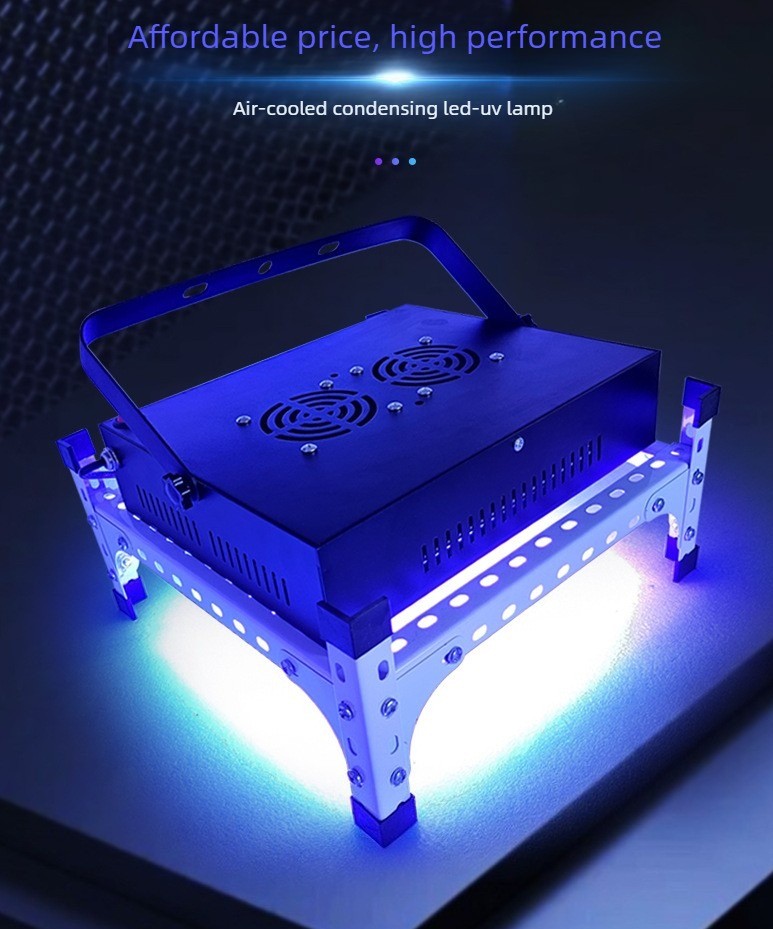
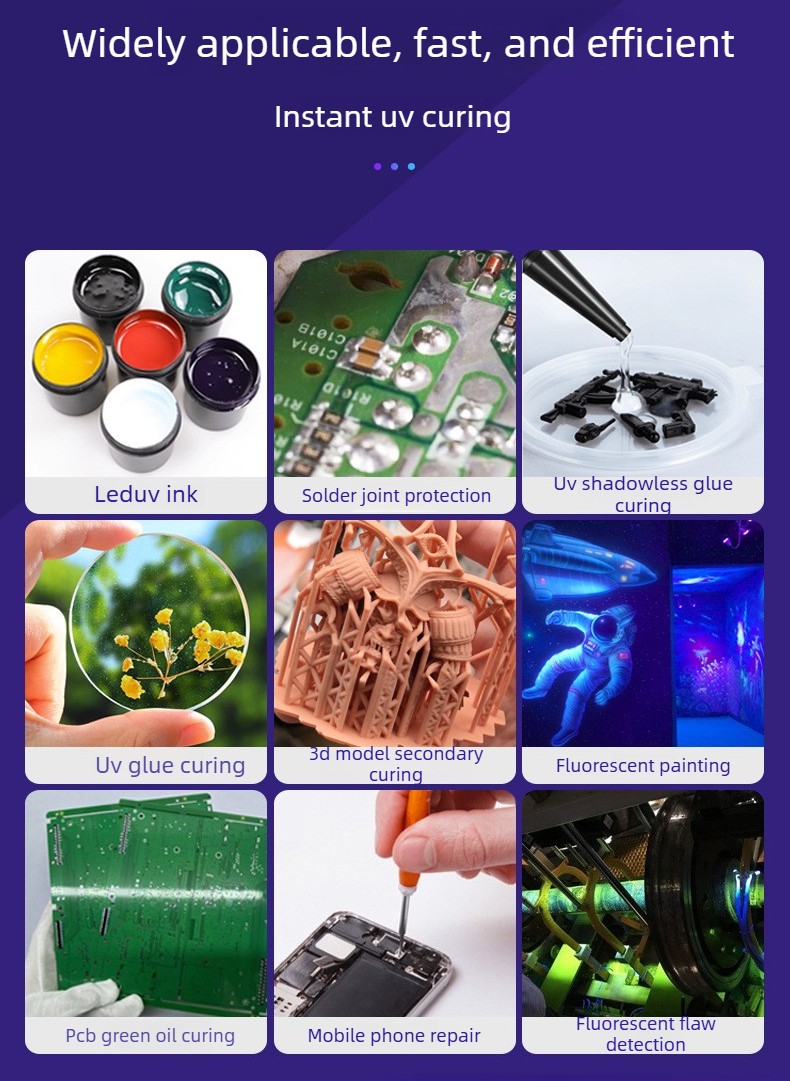
UV curing light for resin is a material that hardens rapidly upon exposure to ultraviolet light, and is commonly used in industrial production and manual crafting. It is composed of oligomers, photoinitiators, etc., and has an extremely fast curing speed, being environmentally friendly and energy-saving. This material is widely applied in fields such as coatings, 3D printing, and electronic protection. Recently, new patent technologies for battery protection have also emerged. Below are UV curing light for resin classification and practical applications.
There are many types of UV curing light for resin, which can be classified according to different criteria to facilitate your selection as per your needs.
By substrate composition: common ones include polyurethane acrylate, epoxy acrylate, polyester acrylate, etc. Different substrates determine the hardness, flexibility and other properties after curing.
By curing mechanism: mainly divided into free radical UV curing light for resin and cationic UV curing resins. The former is more widely used.
By environmental protection characteristics: in addition to traditional oil-based resins, there are also water-based UV resins. They can be dissolved in water, have no solvent pollution, and are more in line with environmental protection requirements.
UV curing light for resin has a wide range of applications, covering everything from large-scale industrial use to personal handicrafts.
Industrial manufacturing: Widely used in the production of paints, inks, and adhesives, such as automotive paints, wood coatings, and packaging printing.
Emerging fields: As a core material in 3D printing, it is used for rapid prototyping; recently, Wanhua Chemical has also obtained a patent for its use in protecting battery casings, which can enhance fire resistance and temperature resistance.
Personal DIY: Suitable for small-scale creations such as hand-tapped glues, crystal jewelry making, and model restoration, with relatively simple operation.