

The UV oven is a specialized equipment used in both industrial and manual settings to cure adhesives, inks, and coatings. It triggers the material to undergo a curing reaction through ultraviolet light, without the need for high-temperature baking throughout the process. The curing speed is fast and the overall temperature is low, making it suitable for a wide range of scenarios.
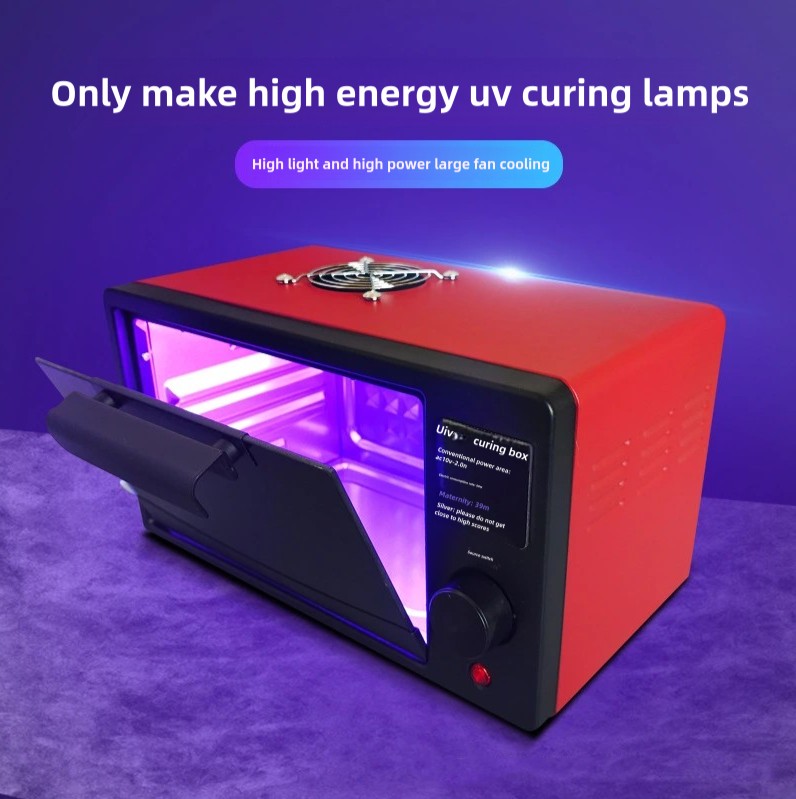
Its core function is to enable the originally liquid UV glue, resin, ink and varnish to quickly harden, dry and set through light exposure. It is mainly applicable in three scenarios:
1. Electronics and industrial production
When factories process mobile phone components, plastic casings, circuit boards, and small electronic components, they use various types of UV adhesives for bonding, sealing, reinforcement, and waterproofing. Ordinary natural air drying has an extremely low efficiency. However, UV ovens can completely cure the adhesive in a short period of time, making the product bonding more secure and suitable for mass production.
2. Handmade DIY, Models and Nail Art
DIY with glue, making 3D models, hardening the 3D printed models later, and applying nail polish and sealing layers can all be done using a small desktop UV oven. The equipment is compact in size and easy to use. It can make the glue surface transparent and harden it within just a few seconds, resulting in a flat and bright finished product that is not prone to sticking.
3. Printing, Leathering and Surface Gloss
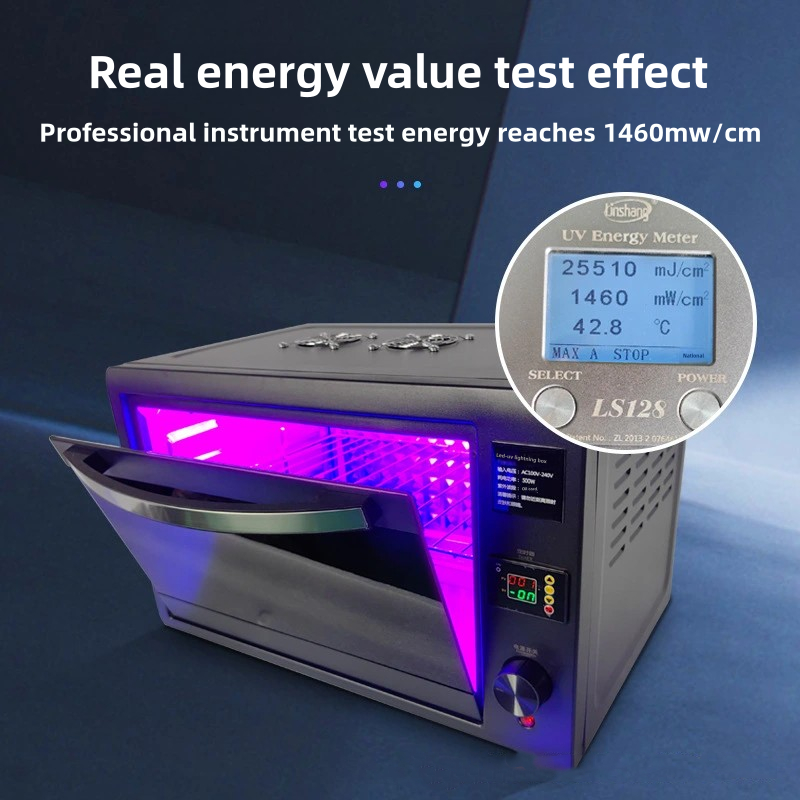
II. The Real Differences Between UV Oven and Ordinary Heating Oven
Many people tend to confuse these two devices, as their actual working logic is completely different:
The working methods are different.
Ordinary household and industrial ovens rely on electric heating to raise the temperature, using high heat to dry out the moisture and harden the material.
UV ovens do not rely on heat. Instead, they use specific wavelength ultraviolet rays to activate the components inside the material, causing a chemical reaction to achieve curing.
2. There is a significant difference in temperature and efficiency.
Ordinary ovens have a slow heating process and a high overall temperature. Many plastic, electronic components, and thin coatings are not resistant to high temperatures and are prone to deformation and damage.
UV ovens, on the other hand, belong to cold light curing. They operate at a very low temperature and will not cause burns or damage to precision small parts. Moreover, the curing speed is extremely fast, usually completed in seconds or minutes, with efficiency far exceeding that of traditional drying methods.
3. Adopting more energy-efficient and cleaner technologies
Traditional high-temperature drying equipment has high energy consumption, and some coatings may also have the issue of solvent evaporation.
The UV curing system has virtually no excess solvents, and the curing process is clean with lower energy consumption. It offers better cost-effectiveness in the long run.
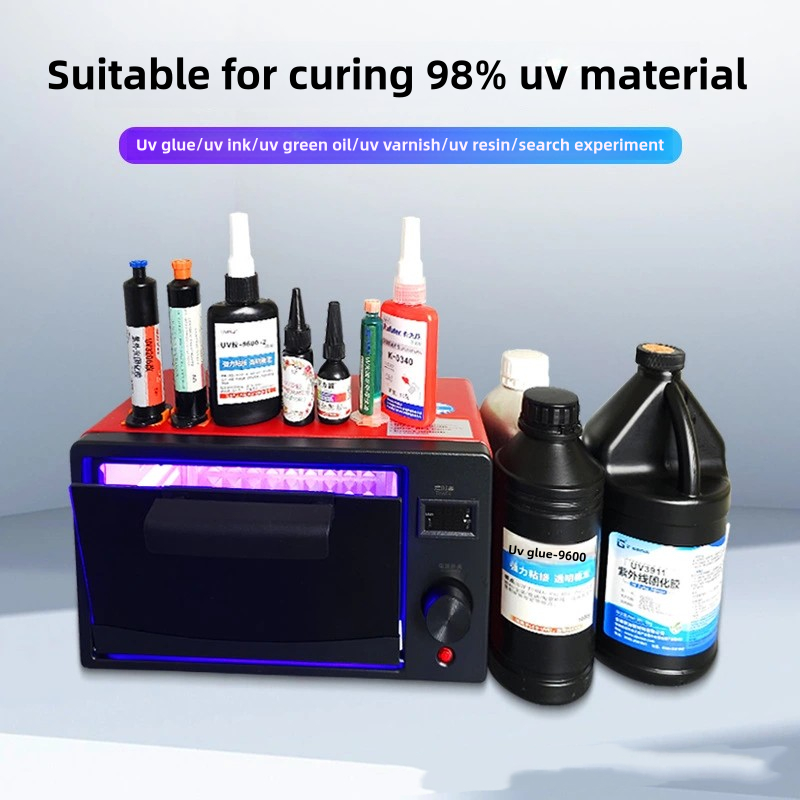
Choose the model based on the purpose, and you will basically avoid getting into trouble:
1. Select the size and style based on the scenario
For ordinary individual players, nail salons, and small handicraft workshops: Choose the drawer-style tabletop model directly. It is small in size, doesn't take up much space when placed, and has simple on/off and timing functions. It is sufficient for daily use.
For factory mass production, large workpieces, and assembly line operations: It is recommended to choose the upright cabinet model or conveyor belt model. They have greater power and more uniform illumination, making them suitable for long-term continuous operation.
2. choosing the best led light source, and considering the heatsink for better disiapation
Currently, the mainstream choice is UV LED light source. There is no need to wait for preheating when turning on the device; it can start working immediately. It has a long service life and better stability.
For small power devices, air cooling is usually used for heat dissipation to meet daily usage requirements; for large power industrial equipment with high workload, water cooling is preferred to ensure more stable temperature control and slower light source attenuation.
3. Daily usage precautions
Ultraviolet rays should not be directly stared at, and prolonged direct contact with the skin is not recommended. When using the device, make sure the cabinet door is closed to keep it completely shielded. The basic operation poses no safety issues.