

Standard single wavelength LEDs come with limited spectral coverage. They are not ideal for projects requiring good color quality and wide light spectrum. Full spectrum 2835 SMD LEDs are built to deliver broader visible light output. Users can apply them in plant grow lights, commercial lighting and residential lighting, where spectrum performance and color rendering matter.
Keep one point in mind: the term “full spectrum” alone cannot tell you the real performance of an LED. Professional buyers need to check actual spectral distribution, CRI, CCT, luminous efficiency, electrical parameters and batch consistency before final selection.
What is a Full Spectrum 2835 SMD LED?
2835 refers to a common SMD package size at roughly 2.8 × 3.5 mm. Full spectrum variants are engineered to emit light covering a wide range within the visible band.
Most white full spectrum LEDs work by pairing LED chips with customized phosphor materials. The combined light output covers blue, green, yellow and red wavelengths.
Spectral performance differs across manufacturers. Some designs boost red light output for plant use. Others prioritize luminous efficiency or color rendering. Never judge an LED only by its name; always check the real spectrum curve.
A spectrum curve shows how optical energy distributes across different wavelengths. When evaluating full spectrum 2835 LEDs, manufacturers need to review these key points: blue band output, green & yellow spectral content, red and deep red output, and overall spectral balance.
Two LEDs with identical CCT can still show totally different spectrum curves. For example, two 4000K LED parts may have different blue or red energy levels, even when their color temperature reads the same.
Such differences will change color rendering, plant growth results and visual effects of finished lamps. This is a key factor that differentiates high-end lighting products.
Full Spectrum and CRI
CRI (Color Rendering Index) measures how accurately a light source reproduces object colors, compared against a reference light. Common grades include CRI 80, CRI 90 and CRI 95.
Full spectrum and high CRI are related, yet they are not the same thing. Full spectrum describes wide wavelength coverage, while CRI quantifies color reproduction capability. Proper LED selection needs both spectrum curve and required CRI targets.
High CRI 2835 LEDs are widely adopted in retail shops, hotels, homes, museums and photography lighting, where natural color presentation is essential.
CRI vs Luminous Efficacy
Many people hold a misunderstanding: higher CRI always brings higher lm/W. In practice, there is a trade-off during product design.
To build a balanced, wide spectrum, the LED needs to generate energy in certain wavelengths that contribute less to lumen reading. That explains why CRI90 or CRI95 LEDs often have slightly lower luminous efficacy than CRI80 versions.
This is not a defect, but a design choice for different use cases. General lighting may focus on energy saving and high lumens. Premium commercial lighting puts natural color rendering as top priority. The right choice balances CRI, spectrum, efficiency and project needs.
Full Spectrum 2835 LEDs for Horticulture Lighting
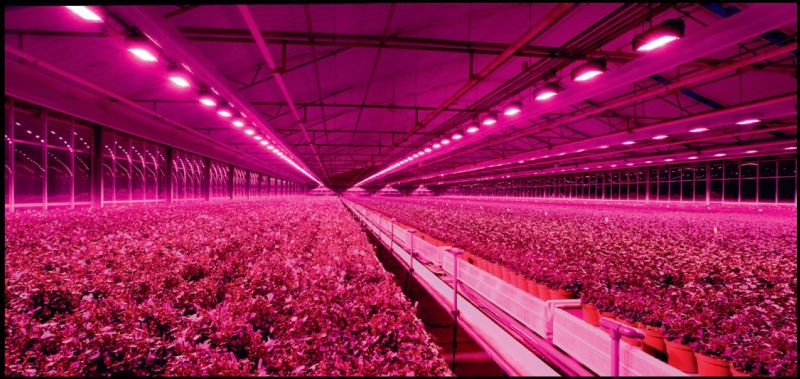
Full spectrum 2835 SMD LEDs are popular in grow light projects. They provide a solid base spectrum, and designers can add dedicated wavelengths like 660nm deep red and 730nm far red.
A typical grow light board design works like this:
• Full spectrum LEDs as main light source
• 660nm LEDs to increase deep red for blooming and fruiting
• 730nm LEDs if far-red light adjustment is required
The exact mix depends on crop types, growth stages, lighting strategy and fixture design. For horticulture use, photon output, photon efficacy, spectral makeup and thermal performance are critical. Lumens and CRI are metrics for human lighting, and cannot fully describe plant lighting performance.
Applications in Commercial Lighting
Full spectrum 2835 LEDs fit projects demanding natural color and good visual quality. Typical applications include retail lighting, residential lighting, hotel lighting, office lighting, museum lighting, photography lighting and display lighting.
When developing such lamps, manufacturers evaluate CCT, CRI, luminous efficacy and color consistency together. Multiple color temperature options are available: 2700K, 3000K, 4000K, 5000K and 6500K, to match various lighting atmosphere requirements.
Benefits of the 2835 Package
2835 SMD package is a mature standard in lighting industry, flexible for PCB layout and lamp design. Its strengths:
• Small footprint
• Supports high LED density on PCB
• Flexible circuit layout options
• Even light distribution
• Compatible with standard automatic SMT assembly
• Easy to mix with other wavelength LEDs
For grow lights, users can mount full spectrum 2835 together with 660nm /730nm LEDs on the same PCB. For commercial lighting, different CCT and CRI options can be used within one product family.
Color and Spectrum Consistency
For professional lighting makers, one sample’s performance is not enough. LEDs must maintain stable performance across mass production batches.
Key consistency parameters:
CCT, CRI, chromaticity, luminous flux, spectral distribution and forward voltage.
Tight BIN control reduces visible color difference between finished lamps, and keeps stable quality over long production cycles. This matters especially for OEM orders running for multiple years.
How to Pick Suitable Full Spectrum 2835 SMD LEDs
Professional buyers should compare real specifications instead of selecting LEDs merely based on names or price.
Important factors to review:
Spectral power distribution, CCT, CRI, luminous flux, luminous efficacy, photon output (for grow lights), forward voltage, operating current, chromaticity BIN, thermal characteristics and batch consistency.
Also pay attention to test conditions. Do not directly compare LEDs tested under different current or temperature settings.
Match Spectrum to Your Actual Application
There is no universal full spectrum LED suitable for every lighting product.
Horticulture lighting usually needs a broad base spectrum plus extra 660nm or 730nm bands. Retail lighting prioritizes high CRI and accurate color reproduction. Residential lighting looks for comfortable CCT, good efficiency and nice color quality. Photography and display lighting require high CRI and stable spectral performance.
Select LEDs according to your final lighting application, rather than only relying on the “full spectrum” label.
Summary
Full spectrum 2835 SMD LEDs offer flexible solutions for lighting products needing wide spectral output and good color performance.
Professional buyers should assess spectrum curve, CCT, CRI, luminous efficiency, electrical specs, thermal performance and batch stability.
For plant lighting projects, photon performance and spectral composition need extra attention. For commercial and residential lamps, CRI, CCT, luminous efficacy and visual quality are more important.
TTLED supplies full spectrum 2835 SMD LED solutions for professional lighting and horticulture markets. We offer configurable CCT, CRI and spectral options to match your finished lighting products.