

2835 SMD LED for Horticulture Lighting: 660nm, 730nm and Full Spectrum
Modern horticulture lighting is no longer based simply on producing more light. The spectral composition of that light is equally important.
For LED grow-light manufacturers, the 2835 SMD LED provides a compact platform for combining different wavelengths on the same PCB. Among the most commonly discussed options are 660nm deep red, 730nm far-red, and full-spectrum LEDs.
Each serves a different purpose. The best horticulture lighting system usually does not depend on one wavelength alone, but on the correct combination of spectrum, photon output, efficiency, thermal design, and crop requirements.
1. Why 2835 SMD LEDs Are Used in Horticulture Lighting
The 2835 package measures approximately 2.8 × 3.5 mm and is widely used in LED lighting because of its compact size and flexibility in high-density PCB layouts.
For horticultural fixtures, these characteristics allow manufacturers to combine different LEDs within the same module.
A typical board may include:
-
Full-spectrum white LEDs
-
660nm deep-red LEDs
-
730nm far-red LEDs
-
Other wavelengths for specialized applications
The ratio can then be adjusted according to the target spectrum.
This gives fixture manufacturers more design freedom than relying on a single LED type.
The 2835 package is also suitable for automated SMT production, making it practical for grow-light strips, modules, panels, and large-volume commercial fixtures.
2. 660nm Deep Red: An Important Horticultural Wavelength
660nm falls within the deep-red region of the visible spectrum.
It is commonly used in horticulture lighting because red photons contribute effectively to photosynthesis and can be incorporated efficiently into grow-light spectra.
660nm LEDs are rarely evaluated by lumens alone. For plant lighting, more useful parameters include:
-
Peak wavelength
-
Radiant flux
-
Photon flux
-
Photon efficacy
-
Forward voltage
-
Operating current
-
Wavelength BIN
A grow-light manufacturer may use 660nm LEDs together with broad-spectrum white LEDs rather than using deep red as the only light source.
A common design concept is:
Full Spectrum / White + 660nm Deep Red
This allows the white LEDs to provide a broad spectral foundation while the 660nm LEDs increase the deep-red component of the fixture.
The exact ratio should depend on crop type, growth stage, target photon output, fixture design, and cultivation strategy.
3. 730nm Far Red Has a Different Function
A 730nm LED should not be treated as simply another red LED.
It lies in the far-red region, beyond the traditional 400–700nm PAR range.
Research has shown that far-red photons can interact with shorter-wavelength photons and contribute to photosynthetic processes when used as part of a broader spectrum. Far-red also has significant effects on plant morphology, so its proportion needs to be carefully controlled rather than simply maximized.
For this reason, 730nm LEDs are normally used as a supplementary spectral component.
Possible applications include:
-
Commercial grow lights
-
Greenhouse supplemental lighting
-
Indoor cultivation
-
Controlled-environment agriculture
-
Research lighting
-
Customized horticultural spectra
A grow-light design may therefore use:
Full Spectrum + 660nm + 730nm
with each component contributing a different part of the spectral distribution.
4. Full Spectrum Provides a Broad Spectral Foundation
A full-spectrum horticulture LED is different from a monochromatic 660nm or 730nm LED.
Instead of concentrating optical output around one narrow wavelength, a full-spectrum LED produces light across a broader part of the visible spectrum.
Depending on the LED design, this may include different proportions of:
-
Blue
-
Green
-
Yellow
-
Red
This broader output can provide a useful foundation for horticultural lighting.
Additional 660nm and 730nm LEDs can then be added when the fixture manufacturer wants to modify specific parts of the spectrum.
This modular approach provides considerable flexibility:
Full spectrum = broad spectral base
660nm = additional deep-red output
730nm = additional far-red output
The correct combination depends on the intended application.
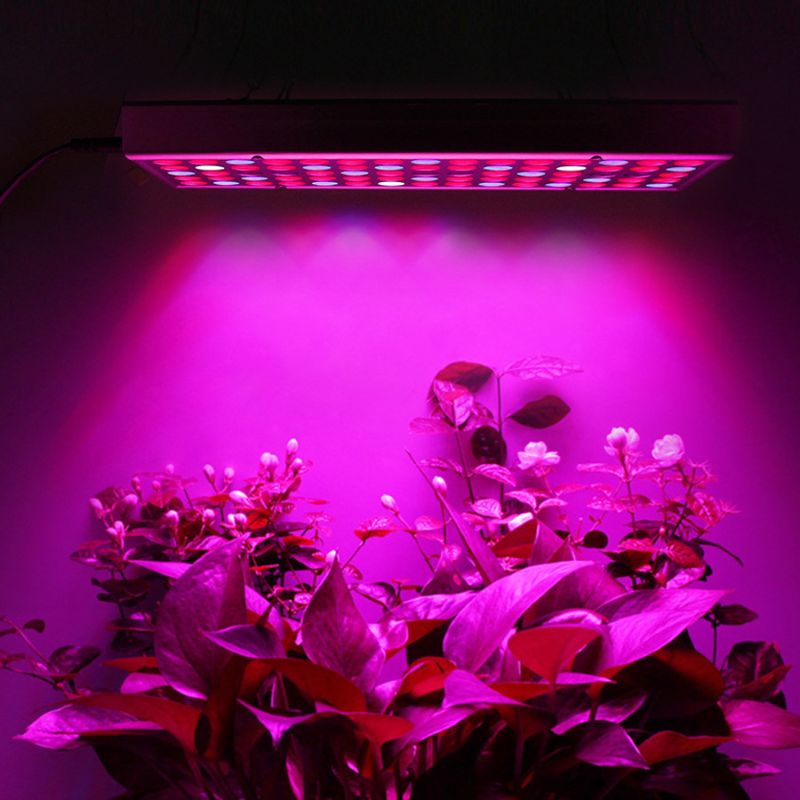
5. 660nm, 730nm and Full Spectrum Are Not Interchangeable
One of the most common mistakes when discussing horticultural LEDs is treating all plant-lighting wavelengths as equivalent.
They are not.
| LED Type | Spectral Character | Typical Role |
|---|---|---|
| Full Spectrum | Broad visible spectrum | Main spectral foundation |
| 660nm | Deep red | Supplemental deep-red photon output |
| 730nm | Far red | Supplemental far-red component |
A fixture manufacturer should therefore define the required spectrum before selecting the LED combination.
For example, specifying only:
“2835 grow-light LED”
is not enough for professional component selection.
A more useful specification would define:
-
Required wavelength
-
Spectral distribution
-
LED ratios
-
Photon output
-
Operating current
-
Electrical characteristics
This allows the LED supplier to match the component more closely to the final fixture design.
6. Photon Output Matters More Than Lumens
For conventional white lighting, luminous flux and lm/W are important performance indicators.
Horticulture lighting requires a different approach.
Lumens are weighted according to human visual sensitivity. Plants do not respond to light in the same way as human vision.
Professional grow-light manufacturers therefore place greater emphasis on parameters such as:
-
Photon flux
-
Photon efficacy
-
Radiant output
-
Spectral distribution
-
PPFD at fixture level
This is particularly important when comparing 660nm and 730nm LEDs.
A deep-red LED may appear relatively dim to the human eye while still delivering useful photon output for horticultural applications.
Therefore:
Do not compare horticultural LEDs by visual brightness alone.
The correct measurement depends on the intended biological and fixture-level performance.
7. Wavelength BIN and Spectral Consistency
Just as CCT BIN control is important for white LEDs, wavelength BIN control matters for monochromatic horticultural LEDs.
A product specified as 660nm does not mean every LED has an identical emission peak.
Production variation can create differences between individual LEDs and between different production batches.
Professional buyers should therefore confirm:
-
Peak wavelength range
-
Wavelength tolerance
-
Radiant or photon output BIN
-
Forward voltage range
-
Batch-to-batch consistency
This becomes especially important when the same grow-light fixture remains in production for several years.
If the LED spectrum changes significantly between batches, the finished fixture may no longer reproduce the original spectral design.
8. Thermal Management Still Matters
Horticultural LEDs often operate in fixtures containing a large number of components.
Higher LED density and operating current increase thermal load.
Excessive junction temperature can affect:
-
Optical output
-
Electrical characteristics
-
Wavelength stability
-
Lumen or photon maintenance
-
Long-term reliability
The complete thermal path should therefore be considered:
LED junction → package → PCB → thermal interface → fixture housing → environment
Driving an LED at a higher current can increase output, but it may also reduce efficiency and increase thermal stress.
For professional grow-light design, the objective should be:
Photon output + efficiency + thermal stability + lifetime
rather than maximum output from each individual LED.
9. How to Select 2835 LEDs for Horticulture Lighting
When evaluating a 2835 horticulture LED supplier, buyers should compare actual technical parameters under similar test conditions.
| Parameter | Why It Matters |
|---|---|
| Wavelength / Spectrum | Defines spectral characteristics |
| Wavelength BIN | Controls consistency |
| Photon Output | Indicates horticultural light output |
| Photon Efficacy | Measures photon output per electrical watt |
| Radiant Flux | Measures optical power |
| Forward Voltage | Affects driver and system design |
| Operating Current | Defines actual working conditions |
| Thermal Characteristics | Influences reliability |
| Batch Consistency | Maintains long-term product stability |
For full-spectrum LEDs, spectral distribution should also be reviewed rather than relying only on terms such as “full spectrum.”
There is no single universal full-spectrum formula suitable for every horticultural product.
10. Design the Spectrum Around the Application
The correct combination of 660nm, 730nm and full-spectrum 2835 LEDs depends on the final lighting system.
A manufacturer should consider:
-
Crop type
-
Growth stage
-
Required spectrum
-
Target PPFD
-
Fixture power
-
LED density
-
Operating current
-
Thermal design
-
Installation height
-
Target efficiency
-
Product lifetime
Some fixtures may require mainly full-spectrum LEDs with a relatively small amount of 660nm.
Others may use stronger deep-red supplementation.
Certain applications may also incorporate 730nm far red.
The LED ratio should therefore be determined by the intended spectral strategy rather than by a fixed formula.
Conclusion
The 2835 SMD LED provides a flexible platform for modern horticulture lighting because multiple spectral components can be integrated into compact, high-density LED modules.
The three commonly used options have different roles:
660nm deep red provides targeted deep-red output.
730nm far red adds a far-red spectral component with distinct physiological effects.
Full-spectrum LEDs provide the broader spectral foundation of the lighting system.
For professional grow-light manufacturers, the objective is not to determine which one is universally “best.” The important task is to combine them according to the required spectrum, photon output, efficiency, thermal conditions, and crop application.
When sourcing 2835 horticulture LEDs, buyers should therefore evaluate wavelength accuracy, photon performance, BIN consistency, electrical characteristics, thermal reliability, and long-term production stability.
TTLED supplies 2835 SMD LEDs for horticulture lighting, including 660nm deep red, 730nm far red, and full-spectrum options. Different wavelengths and spectral configurations can be selected according to the requirements of grow-light modules, commercial fixtures, and customized horticultural lighting projects.