

① Core classification - Medium-pressure mercury lamp: The medium-pressure mercury lamp is the mainstream type of traditional UV curing lamp. The lamp body is filled with mercury vapor and inert gas. During operation, it excites mercury atoms through electrode discharge to generate ultraviolet rays. Its wavelength coverage is wide, with output within the 200-450nm range. Among them, ultraviolet rays with wavelengths of 365nm, 385nm, and 405nm have higher intensity, which can be compatible with various photopolymer materials. For example, in the printing industry, when UV ink is used for curing in UV printing, the medium-pressure mercury lamp can quickly dry the ink within 1-3 seconds, such as in the packaging box printing, using the UV ink cured by the medium-pressure mercury lamp, the adhesion is strong and resistant to friction, and it does not fade easily after long-term storage. However, this type of lamp requires preheating for 5-10 minutes after startup to reach stable power, and it generates a lot of heat during operation, requiring a cooling system.
② Core classification - LED UV lamp: The LED UV lamp is based on a semiconductor light-emitting chip as the core, and through current drive, the chip emits specific wavelength ultraviolet rays. Common wavelengths are concentrated in 365nm, 385nm, 395nm, and 405nm, with high purity of wavelengths. It can be precisely selected according to the curing requirements. It has the characteristic of immediate on and immediate light, no need for preheating, and reaches the rated power instantly after startup, with energy consumption only 1/3-1/2 of the medium-pressure mercury lamp. In the field of electronic component packaging, such as the glue curing of the camera module in mobile phones, the LED UV lamp can precisely control the irradiation area, avoiding the influence of heat on the surrounding precision components, and has a lifespan of up to 30,000-50,000 hours, significantly reducing the replacement frequency. In electronic industrial areas such as Shenzhen, most electronic factories have gradually replaced traditional medium-pressure mercury lamps with LED UV lamps.
③ Working principle analysis: The working of UV curing lamps is based on the photoinitiated polymerization reaction. Photopolymer materials contain photoinitiators. When the UV curing lamp emits ultraviolet rays that irradiate the material, the photoinitiators absorb the photon energy and are activated, decomposing to produce free radicals or cations. These active particles will trigger the resin monomers and crosslinking agents in the material to undergo chain polymerization reactions, causing the originally liquid or paste-like material to form a three-dimensional network structure within a short period of time, completing the curing process. For example, in furniture manufacturing, after UV wood paint is applied to the surface of the wood board, after being irradiated by the UV curing lamp, the photoinitiators in the paint are rapidly activated, and the coating can be cured in 2-5 seconds, forming a hard protective layer that enhances the wear resistance and glossiness of the furniture surface, and does not cause ink to fall off even when in contact with food.
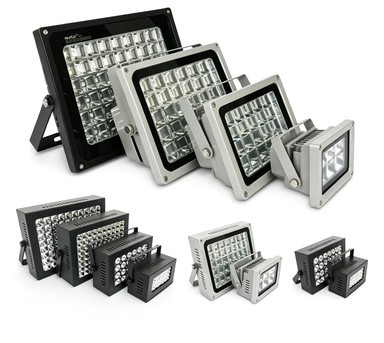
⑤ Application scenarios in the electronic industry: The electronic industry is an important application field of UV curing lamps, involving electronic component packaging, circuit board manufacturing, display screen production, etc. In circuit board manufacturing, the soldering oil on the surface of the circuit board needs to be cured by UV curing lamp, forming an insulating protective layer to prevent circuit shorting. During the curing process, the wavelength and light intensity of the UV lamp need to be precisely controlled to ensure uniform and consistent curing of the soldering oil, meeting the insulation performance requirements of the circuit board. In the production of display screens, such as the bonding process of OLED screens for mobile phones, UV curing adhesives are used to bond the various layers of the screen. UV curing lamps can quickly cure the adhesives at low temperatures, avoiding damage to the screen components caused by high temperatures, and ensuring the display effect and service life of the screen.
⑥ Application scenarios in the coating industry: In the coating industry, UV curing coatings need to be used in conjunction with UV curing lamps and are applied in fields such as wood coatings, metal coatings, and plastic coatings. In automotive component painting, automotive wheel hubs use UV curing metal coatings. After being exposed to UV curing lamps, the coatings quickly cure on the wheel hub surface, forming a high-temperature-resistant and corrosion-resistant coating, enhancing the appearance texture and service life of the wheel hub, and the curing process does not require high-temperature baking, significantly shortening the production cycle. In interior decoration, UV floor paint is applied to the floor surface. After being exposed to UV curing lamps, it quickly cures, with a high hardness surface and strong scratch resistance, and is less likely to cause scratches during daily cleaning, maintaining the long-term beauty of the floor.
⑦ Technical parameters - Light intensity: Light intensity is a key technical parameter of UV curing lamps, measured in mW/cm², directly affecting the curing speed and effect. Different application scenarios have different requirements for light intensity. In the printing industry, UV ink curing usually requires a light intensity of 800-1500 mW/cm². If the light intensity is insufficient, the ink curing is not complete, and adhesion phenomena may occur; in electronic component packaging, the curing light intensity of UV glue is generally controlled at 500-1000 mW/cm². Excessive light intensity may cause the glue to crack, affecting the packaging quality. Light intensity can be adjusted by adjusting the power of the lamp or changing the irradiation distance. In actual use, it is necessary to measure and set the appropriate light intensity value based on the material characteristics and curing requirements, using a light intensity meter to ensure stable curing effect.
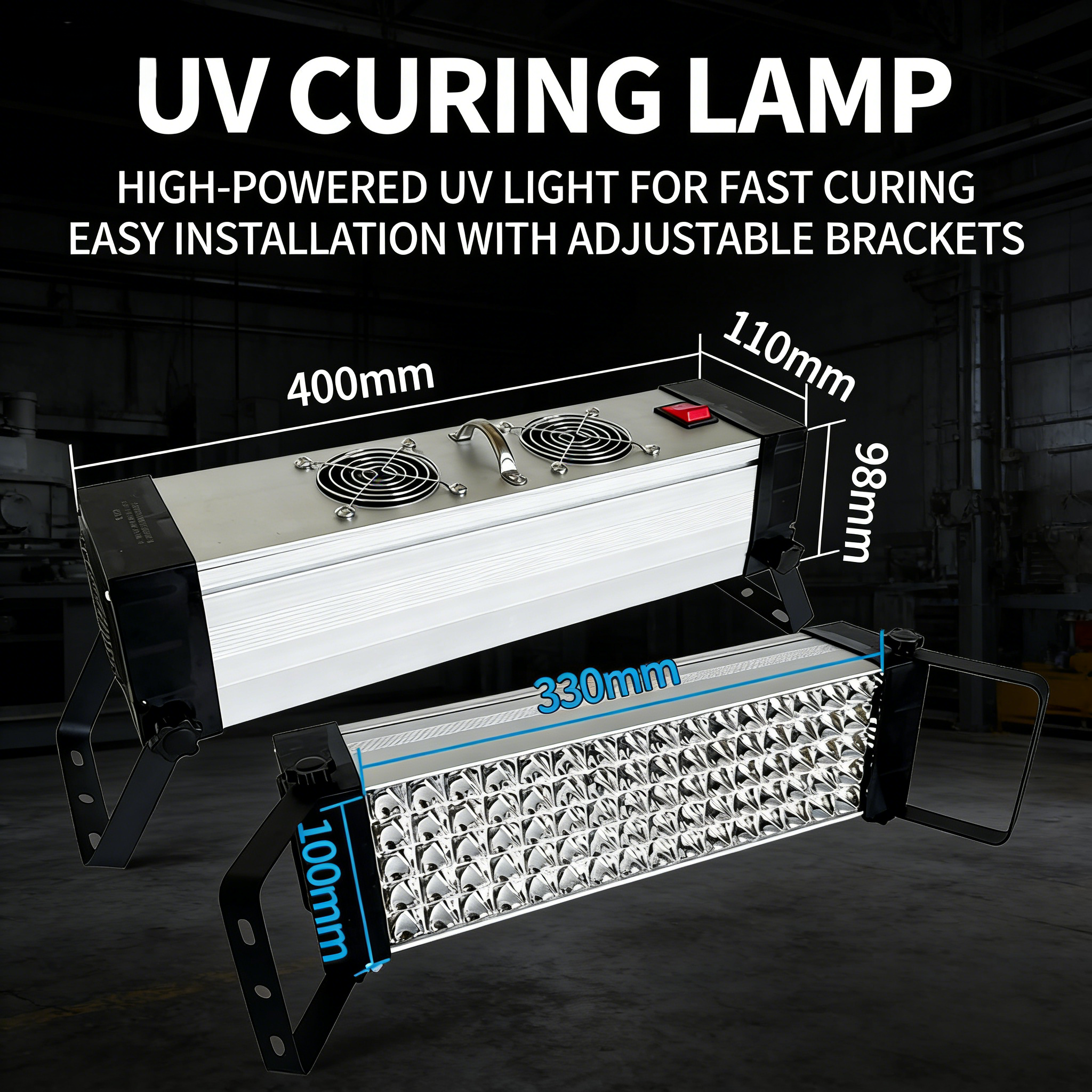
⑨ Operating precautions - Safety protection: When operating UV curing lamps, safety protection measures must be taken. UV curing lamps emit ultraviolet rays that can cause harm to human skin and eyes. Operators must wear special UV protective glasses and gloves to avoid direct exposure of the skin and eyes to ultraviolet rays. If the skin is exposed to ultraviolet rays for a long time, it may develop symptoms such as redness and pain; the eyes exposed to radiation may cause conjunctivitis, keratitis, and other eye diseases. At the same time, UV curing lamps produce ozone, and it is necessary to ensure that the operating environment is well ventilated and install an exhaust system to discharge the ozone, avoiding operators inhaling excessive ozone that affects respiratory system health.
⑩ Maintenance and care points: Regular maintenance and care can extend the service life of UV curing lamps and ensure stable curing effect. Before use, check if the lamp body is damaged or leaking, and if the lamp base connection is firm. If any abnormalities are found, replace it in time. After a period of use, the mercury vapor inside a medium-pressure mercury lamp will gradually be consumed, resulting in a decrease in the intensity of ultraviolet radiation. Generally, it is necessary to replace the lamp after using it for 1,000 to 2,000 hours. LED UV lamps have a longer lifespan, but the chips will experience light attenuation over time. When the light intensity drops to below 70% of the initial value, the lamp also needs to be replaced. During daily use, it is necessary to regularly clean the dust and dirt on the surface of the lamp body. You can use a clean soft cloth dipped in alcohol to gently wipe it. This helps prevent dust from affecting the output efficiency of ultraviolet radiation. At the same time, regularly check the cooling system to ensure that the fan or water-cooling device is operating normally to prevent the lamp body from being damaged due to overheating.