

Prepolymer and monomer system
The core of UV curing technology lies in its unique prepolymer-monomer reaction system. The prepolymer (Oligomer) serves as the framework structure of the curing material, being a type of polymer with unsaturated double bonds, whose molecular weight lies between the monomer and the polymer. These substances undergo cross-linking reactions under the action of photoinitiators, forming a three-dimensional network structure, thereby endowing the curing material with basic physical and chemical properties. According to the application requirements, the selection of the prepolymer directly affects the key performance indicators of the final product, such as viscosity, tensile strength, shear strength, hardness, and flexibility.
Active diluents (monomers) in the system perform dual functions: on the one hand, they regulate the viscosity of the system to meet the requirements of different processing techniques; on the other hand, they participate in the photopolymerization process as reaction components. Monomers can be classified into three types based on their functionality:
Monofunctional monomers: mainly enhance the flexibility of the material and the adhesion to the substrate
Bifunctional monomers: have both dilution and moderate cross-linking functions
Multifunctional monomers: significantly enhance the hardness and mechanical strength of the material
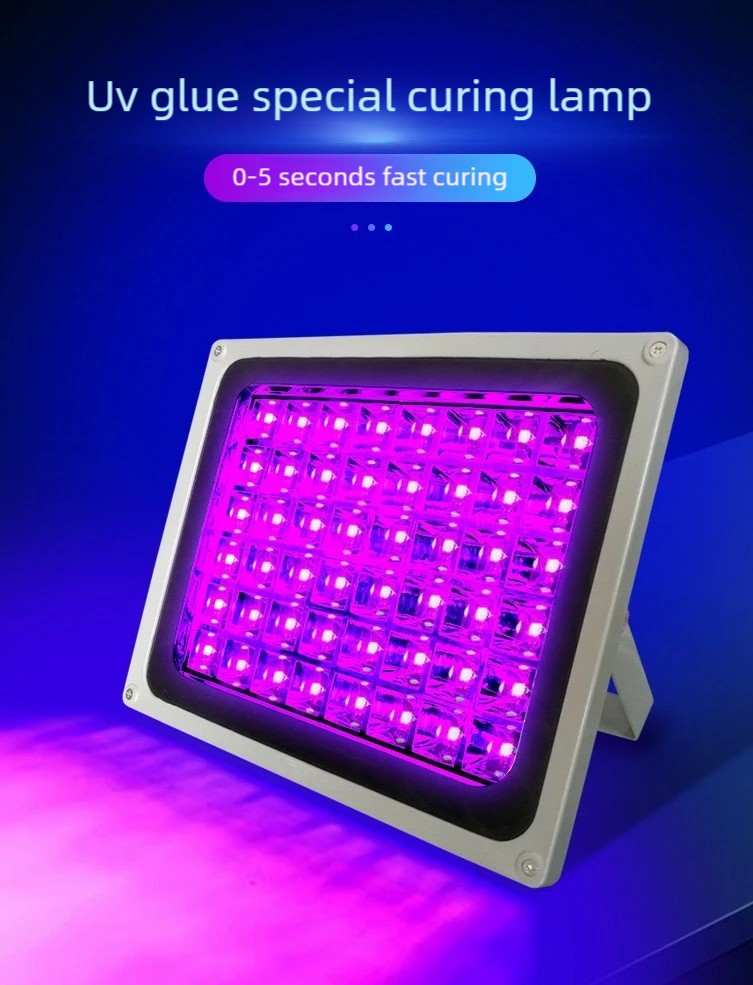
Light initiators are the key functional components of the UV curing system. Their mechanism of action is to generate intermediates with polymerization initiation activity by absorbing specific wavelengths of ultraviolet light (200-400nm) through absorption spectra matching. According to the type of generated active centers, they are mainly divided into two categories:
1. Free radical initiators:
Suitable for acrylate-based systems
Fast initiation speed, high curing efficiency
Susceptible to oxygen inhibition
2. Cationic initiators:
Suitable for epoxy, vinyl ether-based systems
Significant post-curing effect
Not inhibited by oxygen
Sensitive to humidity
The selection of light initiators needs to comprehensively consider factors such as absorption spectrum matching, quantum yield, solubility, and compatibility with the substrate, which have a decisive impact on the curing rate and the performance of the final product.
Equipment system
Light source technology
Modern UV curing equipment adopts a variety of advanced light source technologies, mainly including:
Electrode UV lamps:
Medium-pressure mercury lamps (main peak at 365nm)
High-pressure mercury lamps (enhanced visible light output)
Metal halide lamps (adjustable spectrum)
Pulse xenon lamps (peak power)
Non-electrode UV lamps:
Microwave-excited plasma
Instant start characteristics
Longer service life
More stable spectral output
Optical system design
Efficient UV curing system consists of five key subsystems:
1. Light source system:
Lamp tube power configuration (80-120W/cm)
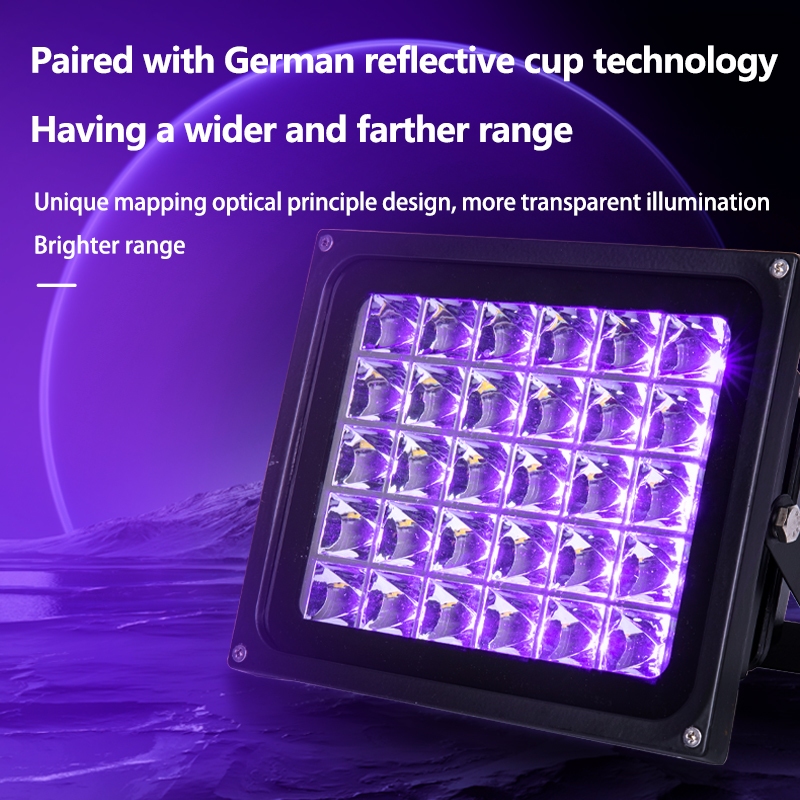
Reflective hood optical design (focusing/non-focusing type)
Electronic ballast matching
2. Thermal management system:
Forced air cooling device
Water cooling circulation system
Infrared filtering technology
3. Transport system:
Speed adjustable conveyor belt
Precise positioning device
Multi-station linkage control
4. Control system:
Real-time light intensity monitoring
Temperature closed-loop regulation
Fault self-diagnosis function
5. Safety protection system:
UV shielding
Ozone emission treatment
Emergency braking device
Process influencing factors
Energy parameter control
The core parameters of the UV curing process control include:
Energy density:
Typical requirements: 500-1500mJ/cm²
Insufficient leads to: incomplete curing, sticky surface
Excessive causes: material degradation, yellowing intensification
Irradiance:
Normal range: 0.5-2.0W/cm²
Affects curing depth and speed
Matches the absorption characteristics of the light initiator
Environmental condition management
Process environment has a significant impact on curing quality:
1. Temperature control: Optimal working temperature: 15-25℃
High temperature leads to: monomer volatilization, viscosity change Low temperature causes: Decrease in reaction rate
2. Distance optimization:
Standard curing distance: 7-15 cm
Short distance risk: Thermal deformation of the substrate
Too long distance problem: Insufficient energy density
3. Atmosphere control:
Inert atmosphere (nitrogen) can eliminate oxygen inhibition
Humidity control (RH < 60%) prevents water vapor interference
Industrial application fields
Coating technology application
UV curing technology demonstrates outstanding performance in multiple industrial fields:
Wood processing:
High solid content primer (filling pores)
Wear-resistant topcoat (3D texture effect)
Instant curing production line
Plastic decoration:
Hard coating for automotive parts
Optical film functional coating
IMD/IML in-mold decoration
Paper processing:
High gloss varnish
Anti-counterfeiting metallization coating
Scratch-resistant packaging material
Electronic and bonding fields
Electronic packaging:
Semiconductor conformal coating
Optical adhesive
Lithography mask patterning
Advanced bonding:
Optical lens assembly
Flexible display laminating
Structural adhesive
Emerging application directions
Post-3D printing curing
Intelligent responsive materials
Biomedical devices
Green packaging solutions
This technology, with its efficient, energy-saving, and environmentally friendly characteristics, is continuously expanding its application boundaries in the high-end manufacturing field and promoting the innovation and development of surface treatment technology.