

The essence and purpose are different:
*Inclusion relationship: UV is the abbreviation of ultraviolet, so the UV lamp belongs to the ultraviolet lamp, and the curing lamp is the one specifically used for the job.
*Primary application: The curing lamp is used in industry or by hand to make paints and adhesives harden quickly; the ordinary ultraviolet lamp is mainly used in hospitals and households for sterilization and disinfection.
*Concerns about wavelength and power
*Wavelength of curing lamp: It mainly emits long-wave ultraviolet (UVA), with the peak usually at 365nm or 395nm, and the energy is concentrated for chemical reactions.
*Wavelength of disinfection lamp: It mainly emits short-wave ultraviolet (UVC), with the peak at 253.7nm, having the strongest sterilization ability but weak penetration.
*Safety precautions for use: Both types of lamps cannot be directly exposed to the human body; otherwise, it will hurt the eyes and skin, possibly causing redness or keratitis.
*Precautionary measures: When using, people should leave the room, and when operating the curing lamp, wear protective glasses and wear long sleeves. After use, ventilate.
UV curing lamps and ultraviolet lamps are two types of light source devices widely used in industry and daily life. Although they both involve the use of ultraviolet (UV) rays, their functions, applications, and technical characteristics are quite different. This article will provide a detailed analysis of the differences between these two lamps, including their definitions, working principles, application fields, advantages and disadvantages, as well as safety precautions.
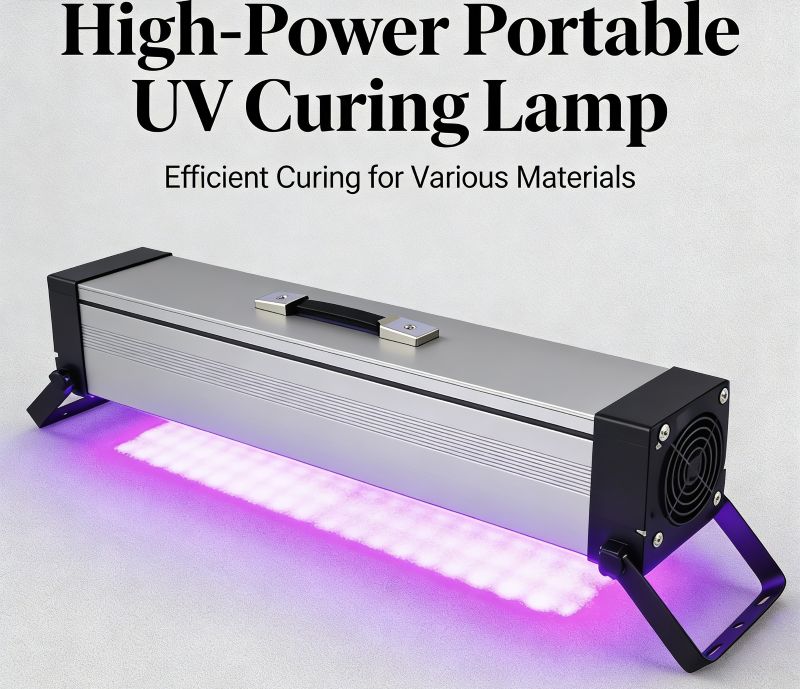
1. UV curing lamp
UV curing lamps are mainly used to rapidly cure or harden certain materials through ultraviolet radiation. They are widely used in printing, coatings, adhesives, and 3D printing, etc. The main function of these lamps is to provide high-intensity ultraviolet radiation to complete chemical reactions in a short time, so that the materials reach the expected hardening effect.
2. Ultraviolet lamp
An ultraviolet lamp is a lamp tube that emits ultraviolet light. It is mainly used in disinfection, medical treatment, detection, and fluorescence analysis. They can be divided into different wavelengths of ultraviolet lamps, such as UV-A, UV-B, and UV-C, each type of ultraviolet has a specific application field. For example, UV-C lamps are often used for sterilization and disinfection, while UV-A and UV-B lamps are used for phototherapy and daily detection.
II. Working principles
1. UV curing lamp
The working principle of UV curing lamps is based on the high energy of ultraviolet rays that can trigger certain chemical reactions. Specifically, when UV curing lamps irradiate materials containing photoinitiators, the photoinitiators absorb the energy of ultraviolet rays and generate free radicals. These free radicals further trigger the polymerization reaction, causing the liquid or gel-like materials to rapidly transform into solid state. UV curing lamps usually use high-pressure mercury lamps, metal halide lamps, or LED light sources.
2. Ultraviolet lamp
An ultraviolet lamp generates ultraviolet radiation by exciting mercury vapor or other gases within the lamp tube. Traditional ultraviolet lamp tubes are mainly low-pressure mercury lamps and high-pressure mercury lamps. Low-pressure mercury lamps mainly produce ultraviolet (UV-C) with a wavelength of 253.7nm. These lamps are usually used for sterilization and disinfection. High-pressure mercury lamps can produce a wider range of ultraviolet (including UV-A, UV-B, and UV-C), and are suitable for fluorescence analysis and phototherapy, etc.
III. Application fields
1. Applications of UV curing lamps
• Printing industry: In the printing process, UV curing lamps are used to rapidly cure ink and coatings, improving production efficiency.
• Coatings and adhesives: UV curing coatings and adhesives are widely used, including protective coatings for electronic products, wood coatings, and various industrial adhesives.
• 3D printing: In 3D printing technology, UV curing lamps are used to cure photoinitiator-containing resins, layer by layer building objects.
• Electronics: For protecting circuit boards and other electronic components, UV curing protective layers are used.
2. Applications of ultraviolet lamps
• Disinfection and sterilization: UV-C lamps are widely used for disinfection and sterilization of air, water and surfaces, and are applied in hospitals, laboratories, food processing and household water purifiers, etc.
• Medical and phototherapy: UV-B lamps and UV-A lamps are used for treating skin diseases, such as psoriasis and vitiligo, through phototherapy.
• Detection and analysis: Ultraviolet lamps are used for fluorescence detection and are widely applied in chemistry, forensic science and biology, etc.
• Daily life: Ultraviolet lamps are used for verifying banknotes, anti-counterfeiting detection and ultraviolet irradiation in aquaculture, etc.
Four. Advantages and Disadvantages
1. Advantages and disadvantages of UV curing lamps Advantages:
• Efficient and rapid: The UV curing process is extremely fast, which can significantly shorten the production time.
• Low energy consumption: Compared to thermal curing, UV curing has lower energy consumption, saving energy.
• Environmentally friendly: The volatile organic compounds (VOCs) generated during the UV curing process are relatively fewer, making it more environmentally friendly.
• High quality: UV-cured materials usually have excellent wear resistance, chemical resistance and weather resistance. Disadvantages:
• Higher cost: The initial investment for UV curing equipment and materials is relatively high.
• Limitations: Not all materials are suitable for UV curing and specific photoinitiators are required.
• Safety issues: Ultraviolet rays are harmful to the human body, so protective measures need to be taken.
2. Advantages and disadvantages of UV lamps Advantages:
• Widespread application: Ultraviolet lamps have a wide range of applications, from disinfection and sterilization to medical phototherapy and scientific testing.
• Remarkable effect: Especially for UV-C lamps, they have a remarkable effect in sterilization and disinfection, capable of effectively destroying the DNA/RNA of microorganisms.
• Low cost: The equipment of ultraviolet lamps is relatively simple and has a low cost. Disadvantages:
• Radiation risk: Ultraviolet rays are harmful to the skin and eyes. Long-term exposure may lead to skin cancer and eye diseases.
• Ozone generation: Certain types of ultraviolet lamps can produce ozone, which may be harmful to health and the environment.
• Limited lifespan: Traditional ultraviolet lamp tubes have a relatively short lifespan and require regular replacement.
V. Safety Precautions
1. Safety Precautions for UV Curing Lamps
• Protective measures: Operators should wear protective glasses and gloves to avoid direct contact of the skin and eyes with ultraviolet rays.
• Ventilation: Ensure good ventilation in the working area to prevent health hazards caused by the accumulation of volatile organic compounds from UV curing materials.
• Equipment inspection: Regularly inspect and maintain equipment to ensure its normal operation and avoid ultraviolet leakage.
2. Safety Precautions for Ultraviolet Lamps
• Avoid direct exposure: When operating ultraviolet lamps, avoid direct exposure of the skin and eyes to ultraviolet rays. Use protective barriers when necessary.
• Use indicator lights: Install indicator lights in the working area of ultraviolet lamps to remind personnel to take protective measures.
• Regular maintenance: Replace ultraviolet lamp tubes and inspect equipment regularly to ensure they are operating in the best condition.
• Ozone control: Ensure good ventilation when using ultraviolet lamps that generate ozone. Use ozone filters when necessary.
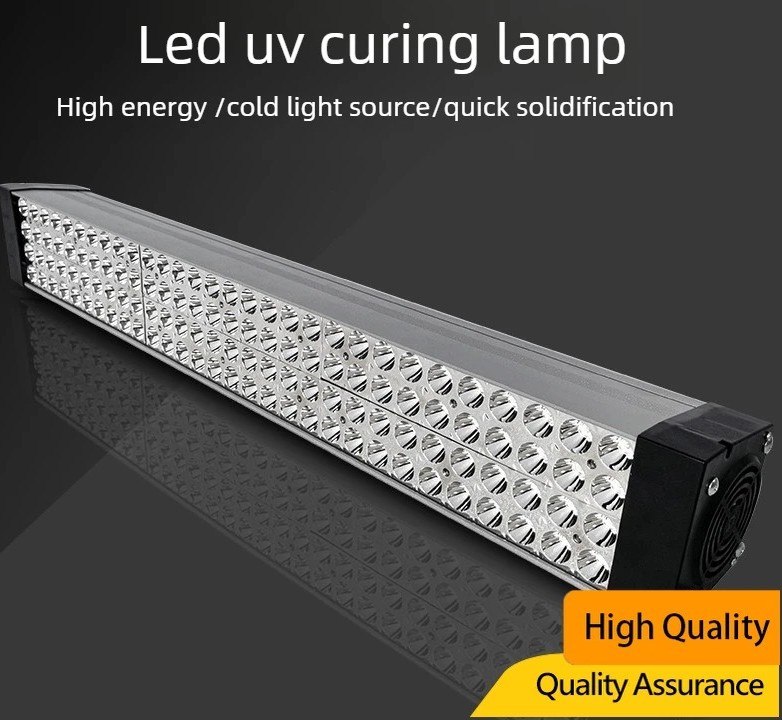
Although UV curing lamps and ultraviolet lamps both use ultraviolet rays, they have significant differences in function, application fields, and technical characteristics. UV curing lamps are mainly used for the rapid curing and hardening of materials, with advantages such as high efficiency and environmental friendliness, but they are costly and have safety risks. Ultraviolet lamps are widely used in disinfection, medical, and testing fields, with remarkable effects and lower costs, but they also have radiation and limited lifespan issues.
Whether it is UV curing lamps or ultraviolet lamps, during use, safety precautions must be taken and necessary protective measures should be adopted to minimize the impact on the human body and the environment. Through reasonable application and management, these two types of lamps can play important roles in their respective fields, improving production efficiency and quality of life.