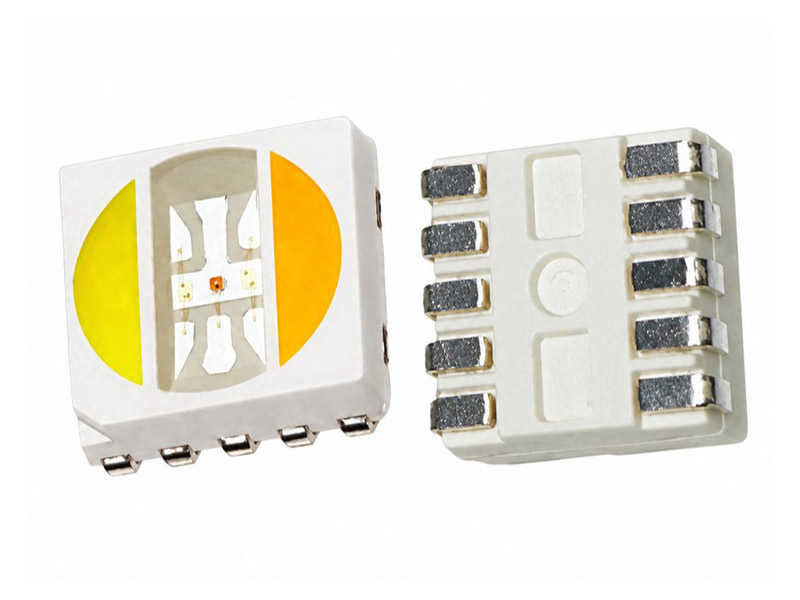
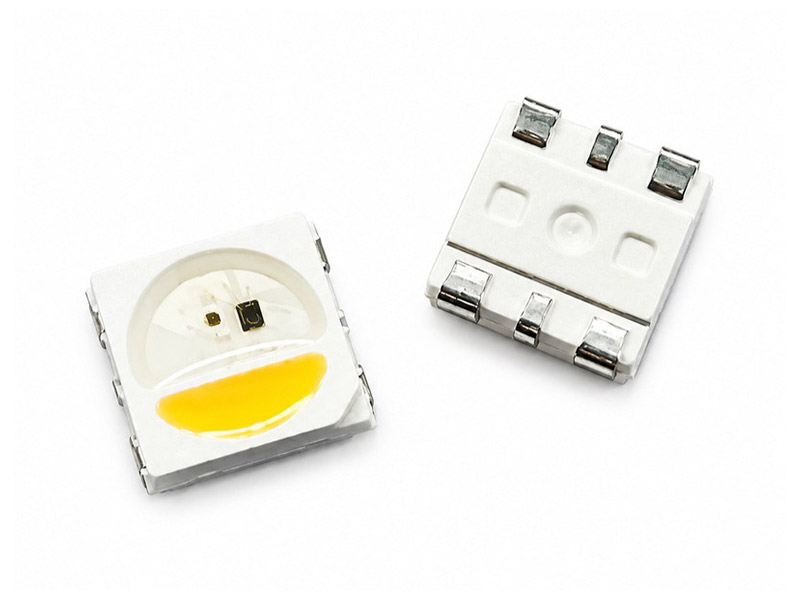
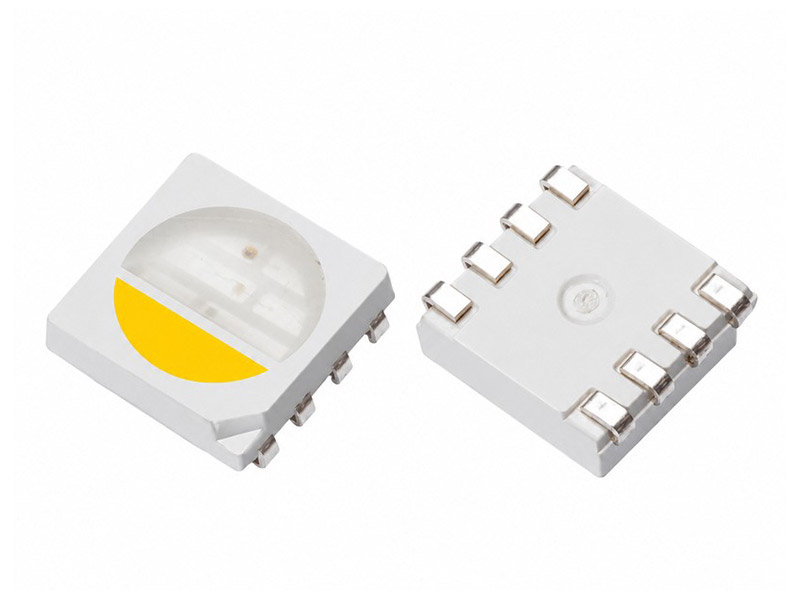
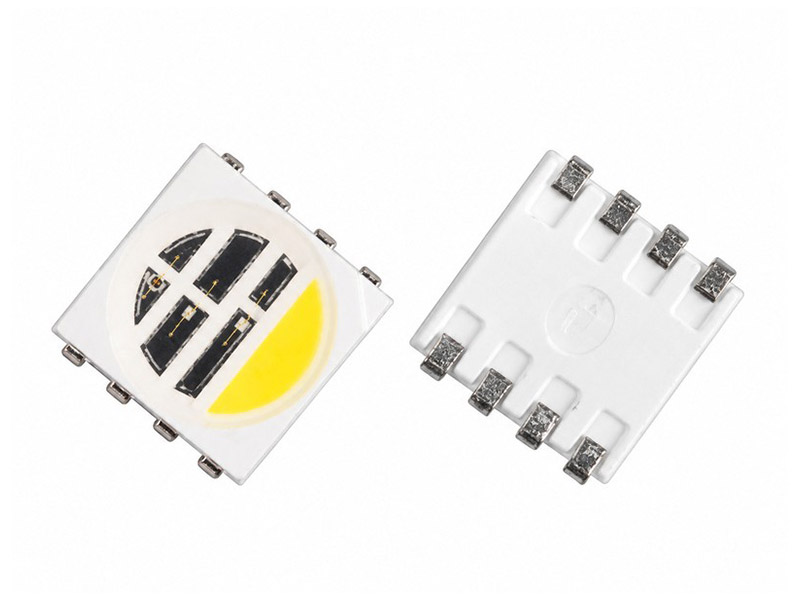
A 5050 RGBW LED is a surface-mount (SMD) light-emitting diode that measures 5.0 mm × 5.0 mm—the "5050" refers to this footprint in tenths of a millimeter. Inside this compact package, four separate LED chips are integrated: red, green, blue, and a dedicated white chip. This "4-in-1" architecture is the defining feature that sets RGBW LEDs apart from conventional RGB LEDs
Package Dimensions
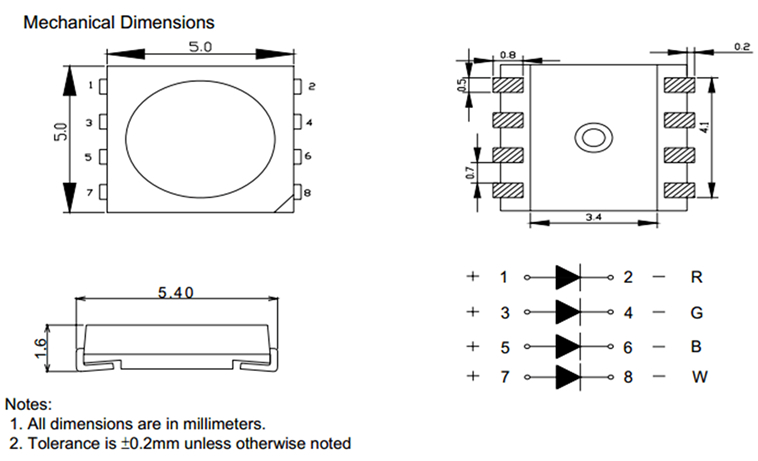
Notes:
All dimensions in mm tolerance is ±0.1mm unless otherwise noted.
Absolute Maximum Ratings (Ta = 25℃)
|
Items
|
Symbol
|
Absolute maximum Rating
|
Unit
|
|
Red
|
Green/Blue
|
|
Power Dissipation
|
PD
|
80
|
100
|
mW
|
|
Forward Current(DC)
|
IF
|
30
|
25
|
mA
|
|
Peak Forward Current*
|
IFP
|
100
|
80
|
mA
|
|
Operation Temperature
|
Topr
|
-40~ +95
|
℃
|
|
Storage Temperature
|
Tstg
|
-40 ~ +100
|
℃
|
*Pulse width≦0.1msec duty≦1/10
Typical Electrical & Optical Characteristics ( Ta = 25℃)
|
Color
|
Codition
|
Dominant Wavelength (nm/k)
|
Forward Voltage (v)
|
Luminous Intensity(mcd)
|
Reverse Current (μΑ)
|
50% Power Angle
|
|
Min.
|
Typ.
|
Min.
|
Typ.
|
Min.
|
Typ.
|
Max.
|
Typ.
|
|
R
|
IF=20mA
|
620
|
625
|
1.8
|
2.2
|
600
|
800
|
10
|
120
|
|
G
|
IF=20mA
|
520
|
525
|
3.0
|
3.4
|
1000
|
1200
|
10
|
|
B
|
IF=20mA
|
460
|
465
|
3.0
|
3.4
|
400
|
600
|
10
|
|
W
|
IF=20mA
|
6000
|
6500
|
3.0
|
3.4
|
7lm
|
8lm
|
10
|
Notes
1. Dominant Wavelength Rank:R:5nm/bin G/B:3nm/bin
Luminous Intensity Rank :1.25double/bin.
2. Tolerance of measurement of luminous intensity : ±10%
3. Tolerance of measurement of dominant wavelength : ±1.0nm
4. Tolerance of measurement of forward voltage : ±0.1V
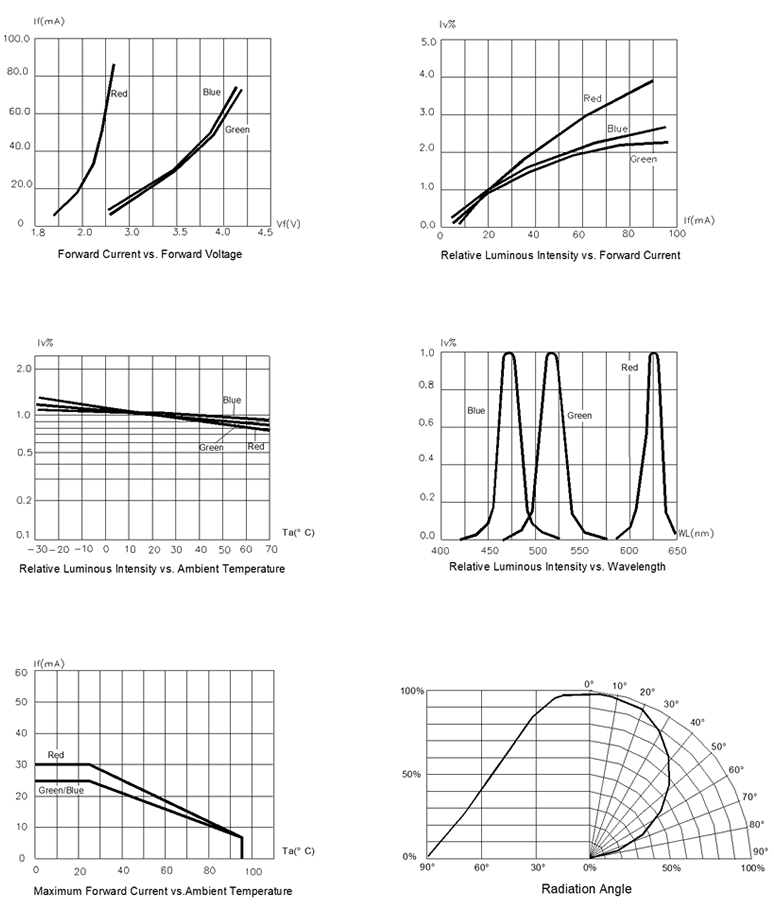
Typical Electrical/ Optical Characteristics Curves (Ta=25°C Unless Otherwise Noted)
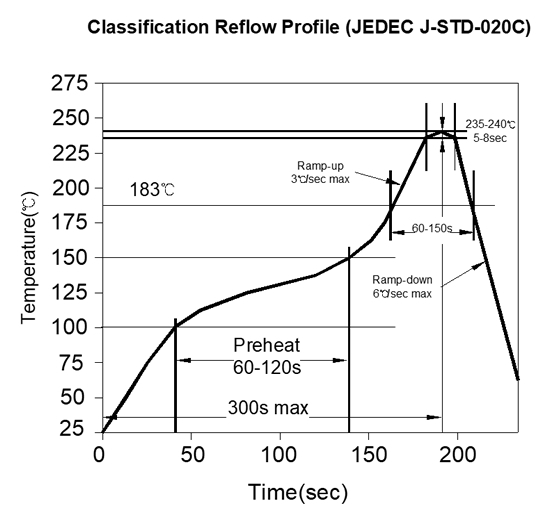
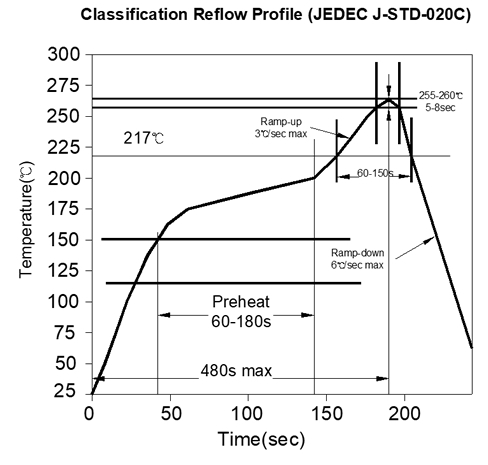
Soldering heat reliability:
Lead Solder
Lead Free Solder
Packing Specifications:
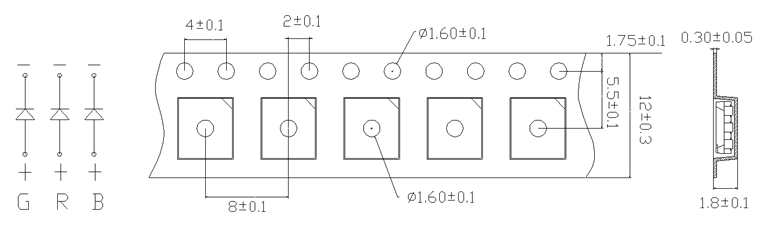
Reel Specifications
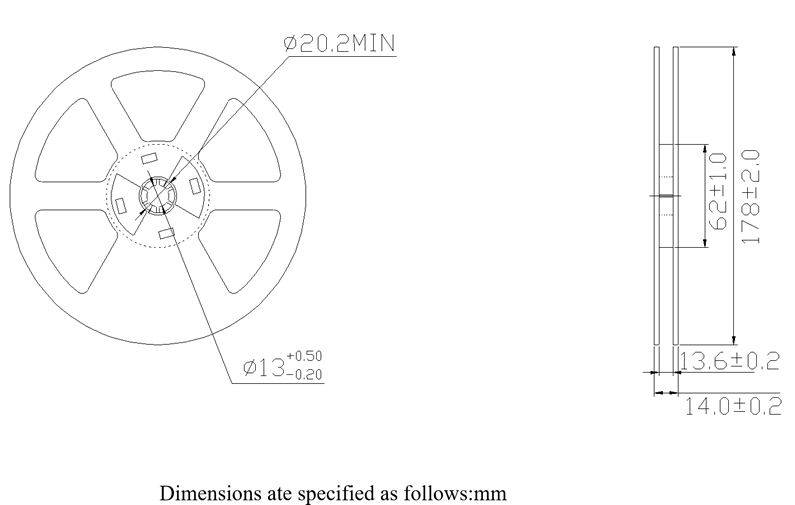
Notes:
1) The packing only appropriate for GMDZ
2) Normal packing quantity: 1,000pcs/reel
|
Revision History
|
|
Rev.No.
|
Change Description
|
Date
|
Prepared By
|
Checked By
|
Approved By
|
|
01
|
New-made specification
|
2014/3/9
|
HDW
|
LF
|
LF
|
Key Advantages Over RGB
The primary benefit of adding a white chip is superior white light quality. Standard RGB LEDs create white by mixing red, green, and blue, but the result often appears bluish or pinkish and has a low color rendering index (CRI) below 70. A 5050 RGBW LED, by contrast, uses its white chip to produce a continuous-spectrum white light with a CRI above 80, making illuminated objects look more natural. This dedicated white channel also boosts overall brightness by 30%–50% compared to mixing white from RGB channels alone. Furthermore, the white chip can be tuned to different color temperatures—typically from warm white (around 2700–3000 K) to cool white (up to 5700 K or higher)—allowing precise CCT control in a single package.
Control and Integration
Many 5050 RGBW LEDs are "addressable," meaning they contain an integrated control circuit and can be driven with a single-wire serial data signal. Each LED acts like a shift register, passing data down the line to enable unlimited cascading. Built-in features often include power-on reset, data shaping, and 8-bit PWM per channel, yielding 32-bit color control overall. This makes them popular in digital LED strips, where each pixel can display an independent color or white tone.
Applications
Thanks to their small size, wide color gamut, and efficient white output, 5050 RGBW LEDs are widely used in architectural accent lighting, mood lighting, smart home fixtures, signage backlighting, and decorative lighting for bars, stages, and retail spaces. Their combination of saturated color and usable white light makes them a versatile choice for both ambient effects and functional illumination.